The A-Z of Child Whispering : O is for Organised

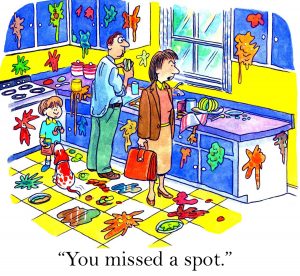
"You missed a spot."

Children don’t feel safe when everything is disorganised and random.

They may appear to like lots of surprises and exciting “happenings” but it can lead to overload and frustration.

When children constantly have their routines interrupted, they feel distracted and unfocused. They need routine and strong boundaries. They look to the significant adults in their lives to provide these.

They are encouraged to do so many after- school programs that they don’t have the chance to just play, dream, wonder or integrate all their experiences and make sense of them. This leads to very low Intrapersonal intelligence.

Believe it or not, children thrive in organised classroom and home environments but need a little wriggle room in both!

Many wise teachers are now giving the children free time once a week – even half an hour puts a smile on their faces! The big complaint from children to me is always that they have no time for free choice and play.fstickmankidsflyingkite
At home, parents can ensure the children have at least one afternoon spare after school!

Organised children tend to learn time management skills at an earlier age.

They learn to timeline their homework assignments, improve study skills and actually finish things before starting the next thing.

They know what is expected from them and understanding expectations is a key skill for successful social skills.

Here are some tips for busy teachers and parents-

Firstly, get YOURSELF organised.  Organise your time and

belongings and make sure your class or family notice the changes.

Draw up a time-table and share with children. Stick to it and do the important things first.

Limit the number of after-school activities children do so they can finish homework and have some free time for play, wonder and dreaming.

Folders in the open file cabinet

Show children how to get organised for the next day. They can pack their  school bag, important books etc and get lunch organised.

This avoids the frustration and confusion that can reign on busy mornings!

Ensure there is a place for EVERYTHING and children know where it is. If possible label everything.

Insist on children doing some chores so they begin to develop a sense of responsibility.

Plan meals and involve children in those choices and allow them to help prepare the meal.

Minimise screen time. Constantly jumping from app to app and watching programs with large amounts of ads will wreck their concentration skills.

Insist on a reasonable bed time and stick to it.

Even if they cannot sleep and need to read for a while, they will eventually adjust and we know from research that rested children absorb more information in class.

Also- parent time is valid! You need time to think, plan, organise and relax.

If you help children develop time management and organisational skills you will be giving them a life-time gift!



“Vicky – the words just won’t come out.”

Unhappy Male Student Working At Desk In Chinese School ClassroomThis sad statement came from an 8 year old. At this age children should be bubbling with creativity and ideas. If they know HOW to write words, the words and ideas should flow eKia Hui 2asily from the brain to the page. Asa 1

And yet, like Andrew, so many children find the reverse is happening.

They are constrained from a fairly young age to write in various genres such as persuasive text, reports and so on and cannot JUST LET THE WORDS FLOW!

it is the same with any creative pursuit- put too many rules in too early and the ability to get into flow just goes!

I am happy to report that ALL children who attend our courses for more than 3 months CAN let the words go- in fact they love the process!

We write in short spurts (8 minutes) with no talking aloud and Scarlett 2nobody is allowed to not write (even teachers as well.) The kids double, triple and often quadruple the number of words they write.

We have developed many methods to restore children’s ability to write creatively and MIND JOURNEYS is a very powerful strategy.

We have used this method for many years and we are continually adding more visualisations (mind-journeys) for children to listen to with eyes closed in a darkened room. A teacher reads them calmly and slowly with the children cross legged in front of them.

A child rings the writing gong to commence writing and one to finish at the end of 8 minutes.

Lights are deliberately kept low to aid concentration and focus.

The kids start to switch on their imaginations and imagine they are IN the stories!

Once the writing gong has sounded the children have no choice- they are told to put pencil paper to paper and write about whatever came into heir minds.

Most just ge491506[1]t writing quickly but occasionally I might have a child just sitting, not sure what to write (usually a new child) and I just tell the, “wiggle your pencil around on the page and something will come out!” And it does!

Of course we also teach editing and the basic genres but we give priority to the creative aspects of writing so children, even the most reluctant ones, can re-discover their writing voices.

Our new MIND JOURNEYS book is now available in Singapore and will be available from the beginning of October in Australia.

Please contact us to get a copy so you have 50 Mind-Journeys to help the children in your class to LOVE writing.

Teachers who sign up for our next ALL KIDS CAN WRITE course (Thursday 25th October) will receive a free copy, learn more about this approach and be given a practical introduction to the other methods we have evolved to get our students to LOVE WRITING!


SAD CONVERSATIONS

bambino disperato si copre il voltoAlmost everyday I have sad conversations with parents and children about school work and homework they cannot understand.

A little challenge is healthy but to be constantly confronted with work they have no chance of succeeding with is just plain depressing. Then – just to rub salt in the wound, the NAPLAN results arrive and another nail is driven into the coffin of self-esteem!

F grade and a sad smilie, written in red letters in a spiral pad, shallow DOF

Of course there are curriculum guides that tell teachers the content expected to be mastered at different grade levels BUT a teacher’s task is always to take a child metaphorically by the hand and lead them through the curriculum. If they have not reached a certain stage you cannot just MAKE this happen. Children need to be given work they CAN do and then be shown how to get to the next level.

Children are not machines to be suddenly accelerated by a switch. They are wonderful gifts from God for us to nurture, love and lead gently through the education maze.

There is NOTHING more demeaning than to not be able to do school work all day (with classmates teasing and goading) and then to be given homework that you can’t do either. Schools need to be aware of how many families spend hours on homework tasks every night with resultant frustration and tears. These kids are not getting time to play, chat, daydream and generally be kids.

There is very little evidence that copious amounts of homework help children at all. Reading, practising basic spelling, phonics and times tables is appropriate. Any more than 30-40 minutes per evening is too much and children under 8 should have even less.

We need to stop robbing children of their childhoods and help them at point of need.

That’s why tuition that targets specific skills not understood, and that builds self-confidence and self-esteem really works!

Why have we studied the OLYMPICS?


000631-0001-000058I know parents often wonder why we use themes such as OLYMPICS as part of our teaching program.

One answer- RELEVANCE and ENGAGEMENT!

Children pay attention to learning that is intrinsically interesting and nearly ALL of our children are fascinated by these games. The games have inspired them and added to their understanding of how to handle disappointments, persist through hardships and practise important skills.IMG_3965

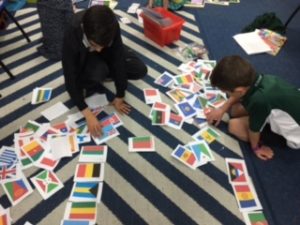
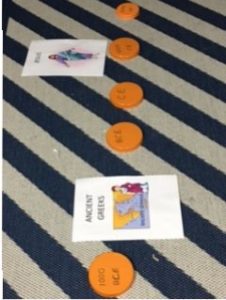
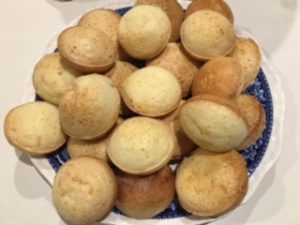
Our Primary and Secondary students have written from the point of view of an athlete ready to run, calculated distances, worked on tessellating flags in isosceles triangle shapes, discussed individual performances, written persuasive pieces about drug-cheats, learned about Brazil IMG_3961IMG_3915and written reports about animals in the Amazon basin, eaten Brazilian cheese bread and provided descriptions, learned about timelines so they understand when these games began and much, much more!

Academic literacy and numeracy outcomes have markedly increased throughout this theme and of course interest has really risen.

The kids are ENGAGED and there is no learning without engagement.

I know some parents would rather see kids sitting quietly doing worksheet after worksheet at desks but is that really learning?

We believe in TEACHING and providing HANDS-ON learning so our children understand! Worksheets are used for reinforcement and consolidation so they are important.

Real learning might be messy, involve movement and lots of questions. This type of learning involves many weekly hours of thinking, looking at needs of students and planning. We will never be one size suits all! We know our students have many learning styles and cocktails of abilities.

We want ALL of our students to succeed!

We seek to stimulate children’s brains- not anesthetize them!


NAPLAN WASTE

brain 1So there have been no significant gains in student results this year.

So what?

Can we measure the more intangible but more important outcomes with tests?

E.g.

  • Curiosity and wonder about the world
  • Formulation of ideas, dreams and goals
  • Ability to socialise and communicate
  • Determination to overcome difficulties
  • Fresh, creative writing
  • Ability to think logically and problem solve
  • Children’s ability to empathise with others and ability to manage their own strong feelings
  • A feeling of self-worth and optimism?

Of course we can’t! You need careful observations and skilled teachers and parents to identify the above qualities.

All teachers know how important the above outcomes are to children’s lives and yet we concentrate on such a narrow band of abilities.

Why do we think education is always about measurable results?

Why are we so scared of aspects of education we cannot pin down?

A good education is so much more than the results in the areas that NAPLAN measures.

Once again, children are being likened to machines that just need information rammed in tightly.

NAPLAN completely ignores the fact that children have at least 8 intelligences. Children who lack skills in maths and literacy feel like complete failures.

We see children with amazing art ability and aptitude for thinking deeply and logically. We see children who know so much about science and have “out of the box” ideas for helping our environment. These kids are still consigned to the rubbish heap.

We have not come very far!

So many years and so little progress!

“Now, what I want is Facts. Teach these boys and girls nothing but Facts. Facts alone are wanted in life. Plant nothing else, and root out everything else. You can only form the minds of reasoning animals upon Facts; nothing else will ever be of any service to them.”
Charles Dickens, Hard Times

The money spent on the development and administration of NAPLAN could so easily have been provided to schools for extra teachers, resources and ongoing professional development of teachers. That would have contributed to long lasting benefits for all Australian children!

Charles Dickens had it right- “There is a wisdom of the head, and… there is a wisdom of the heart.” – Hard Times

Hard Times ahead for education if we don’t get our heads out of the sand and stop applying flawed pedagogical principles to the education process!


The ABC of Child Whispering: N is for NOTHING

couch_girl_109623One of my favourite picture books is called The Gift of Nothing by Patrick McDonell.

It is quite a challenging book as it reminds us to shut down our monkey minds and just be.

This is an alien concept for many of us and that is why I read it so often. I need this message and I suspect many of you do too!

All children and big people need NOTHING to be whole.

Sometimes we just need to be there for each other and just enjoy nothing.

One of our main intelligences is INTRAPERSONAL intelligence and this cannot be developed without NOTHING time. This means time to do anything or nothing. Time to sit and look at the wall, eat fairy-bread on the front verandah, nap, hang out with each other (or not) and have an empty brain.

When I talk to young people about changes they really wish they could make, TIME always comes up. Kids feel as if they have no spare time- no NOTHING time. We have this crazy idea that any spare time must be used up, planned, another activity, music class, sport fitted in but why?

Are we scared that they will become lazy and miss out on something important?

Actually they ARE missing out on something important!

The time to play, dream, read, build, draw ……ANYTHING they choose!

Give them the gift of NOTHING at least once a week. Be there to share it with them if they wish and if not treat yourself to NOTHING. Be brave- put your phones and I pads and electronic games away. Don’t plan the time. Just see what happens!

Take a NOTHING mental health day occasionally with your kids- no work or school and everyone wears PJs all day and does precisely what they want.

These are the days we can all think, dream and develop ideas. These are the days when we become human rather than frenzied activity robots. These are the days that will be remembered as you all rediscover the joy of NOTHING and EVERYTHING!


The ABC of Child Whispering – N is for NO!

The ABC of Child Whispering

N IS FOR NO    NO

Why are parents and teachers so scared of saying, “NO!”?

When researching material for this post I came across many articles about creative ways to say “No.”

Save your energy for something really creative!

Just say, “NO,” and mean it! It’s not rocket science and your child will not develop a phobia or some deep psychological problem from this word.

I said it at least 10 x over a 2 hour very successful, happy teaching session this morning. Each time I said it the kids involved either-

a. just stopped what they were doing/asking for

or

b. repeated the inappropriate behaviour or asked again (the more persistent ones!) I simply said, “No!” again and they gave in.

Kids like to push the boundaries and some will push further and more determinedly. That’s fine- shows strength of character. Still say, NO!”

If your child is doing something inappropriate or asking for something you don’t want to give simply say it.

They will thank you one day.

If you don’t discipline your child, the world will- and in a much harsher, unkind way!

NO is not a loaded word- just a word that conveys a clear meaning. You can’t do that and I mean it!

Have a look at this fantastic article and maybe stop continually justifying your NO!

http://www.huffingtonpost.com/dana-westreich-hirt/just-say-noto-your-kids_b_5775956.html


They look but never see!

I have just returned from a trip to the UK for a conference and holiday and have been reflecting on all the wonderful sights, places and people I encountered.

I have plenty of time to think (as severely jet-lagged) so have twice the time for reflection!

I love the National Gallery in London as it houses so many of my favourite paintings and each year I notice how few people really look at paintings.

While in the room with many of Van Gogh’s paintings I just sat and watched people. There was a huge crowd jostling for the best space to click, click, click with their mobile phones and NOBODY looked. NOBODY gazed and tried to take in the incredible beauty, challenging messages, colours, juxtapositions of objects and sky and strange unsettling images.

Sadly they just wanted to have these little rectangular pictures on their phones to show and prove they had been there.

Why?

Don’t people want to SEE anymore?

Is it really too hard to interact and to have to think and reflect?

I was with my cousin, his partner and young daughters (4 and 5 years) and witnessed completely different reactions from the kids.

Their parents encouraged them to stand and stare at a couple of the pictures and then to try to draw them. The kids were SO engrossed and spent around 45 minutes at their drawings. They SAW far more than these people who were “doing the National Gallery.”

I want the kids I IMG_3250teach to SEE and to BE and to not fall into the trap of interacting with their environments in such  shallow ways. To do that I have to plan learning activities where they can really THINK, REFLECT and INTERACT with learning materials.

When children are rushed they are troubled and the world is already so full of troubled people living lives at headlong speeds. Taking time, reflecting and really SEEING can be healing opportunities where we grow, find out who we are and dwell in the deep end for a while!

ELVES, WISHES, HOT CHIPS AND SPELLING!


elf


ELVES, WISHES AND SPELLING!

On Saturday we commenced our WINTER FESTIVAL.

I told the kids the old solstice legend of people hanging their wishes from trees for the elves to see and hopefully grant! The kids were keen to do the same so we hung our wishes on our learning tree.

I also told them that elves HATE spelling mistakes and don’t read wishes that are misspelled! What a change- they all checked their spelling carefully, checked in with teachers and used dictionaries. I have a feeling these spelling elves are here to stay at ICE!FullSizeRender (002)

I was fascinated to note their wishes. Many asked for gifts for their families. One child wished for immortality. A few asked for happiness and peace.

I truly believe rituals and celebrations are very important for children. They love the “wheel of the year,” and are fascinated by old traditions. They help children feel grounded, part of the community to understand their connections to the past.

This week and next we are celebrating this MIDWINTER time with a veritable festival of learning activities. We have even obtained a fake log fire to add to the atmosphere!fire

Here are some of our activities- they can easily be adapted for any classroom and are great to use at home!

  • Studying and writing about ice crystals http://encyclopedia.kids.net.au/page/ic/Ice_crystals
  • Mindfulness sessions- staring into a candle or fire and sharing what came into your mind.
  • Cook and eating wintery food such as baked potatoes, apple bread or hot chips.chips
  • Expressing gratitude for all the wonderful blessings we have experienced this year and setting goals for the warmer months ahead. You could light a tiny tea-light for each blessing children tell. (Keep up high!)
  • Reading and writing about the Earth’s orbit around the sun and why we have seasons.
  • You tube cold weather clips of crackling fires and snowy scenes. https://youtu.be/25SV6zqTl1k

https://youtu.be/zGD5C4wLsrs

So put plenty of layers on, make huge hot chocolates and celebrate this lovely deep, introspective season. It offers opportunities to go deep, get introspective, re-adjust the sails and just take a much needed deep breath!


Treating kids like rubbish!

“Your son is absolutelycrumpled paper no good at anything!”

I was chatting to one our Mums this evening and she told me of a very sad incident. It concerned her young son and his classroom teacher.

The classroom teacher told the mother, “Your child is absolutely no good at anything. He is not good at reading, writing, maths, art or even physical education.”

The mother gave the best answer possible, “Whatever,” and grabbed a piece of writing paper from the teacher’s desk. She crumpled the paper into a ball and held it up for the teacher to see. “My son is like this crumpled piece of paper. You and this school have completely crushed his spirit and he has folded up deep inside himself.”Then she threw it in the bin and left.

She knows from her mother’s heart and brain that her son has strengths and weaknesses just like any child. She knows that given encouragement and a loving and nurturing learning environment, he will thrive.

This incident took place in a Church school. I think they need to remember the words of Jesus, their leader,

“Then Jesus called for the children and said to the disciples, “Let the children come to me. Don’t stop them! For the Kingdom of God belongs to those who are like these children.”

No wonder this child has no confidence and has given up. At the moment he believes he is useless and it now our job to help him re-build his fractured self-esteem.

How sad that a teacher can behave in this way. Educators are meant to teach and build children up- not crush their beautiful spirits.

error

Enjoy this blog? Please spread the word :)