
The media have raised issues about community concerns that perhaps children are not coping with formal work at such an early age. I think it is more likely that the formal METHODS are not working.

Victoria Carlton ~ The Child Whisperer
The World of Victoria Carlton
The media have raised issues about community concerns that perhaps children are not coping with formal work at such an early age. I think it is more likely that the formal METHODS are not working.
Young children LOVE to learn and are ready to learn some early literacy and numeracy concepts. The problems start when we think they ALL must be ready at the SAME time and will learn at the same pace!
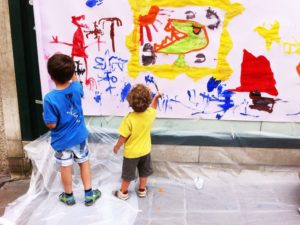


The holidays are fast approaching and the kids are hanging out for some freedom!
We ALL need rest and recreation and often just a change of routine, place, pace will make a massive difference!
We always notice how fresh children appear to be during our holiday learning sessions and at the beginning of term. Even a few days without school routine can work wonders!
These holidays represent a little more of a challenge for parents as the weather is colder, wetter and children are often cooped up inside.
Rather than cave in and allow wall to wall TV, Minecraft and such like- how about trying a few of these?
(We know that unlimited screen-time will not benefit children and may do real harm.)
Note: Even though most Aussie kids don’t see much snow- they WANT to! To that end, some of these suggestions include fake snow and so forth!
20 Things to do in the Winter holidays
http://www.instructables.com/id/How-to-Make-6-Pointed-Paper-Snowflakes/
This one is sufficiently complicated to really absorb them and to teach them about geometry!
Mix up some water and epsom salts and paint the snowflakes. This will give them a glittery appearance and when dry they can be hung up.
https://au.pinterest.com/victoriacarlton/winter/

http://www.familyfoodgarden.com/growing-eating-fresh-greens-52-weeks-of-the-year/
http://www.funathomewithkids.com/2013/02/learning-about-spring-bulbs-older.html

http://www.lionbrand.com/blog/teaching-kids-to-crochet-and-knit-why-waldorf-schools-incorporate-crafting-into-their-curriculum/
• Make hot chocolate with marshmallows to enjoy just before bedtime with some great stories.
• Have a PJ day where EVERYONE stays in PJS all day and draws, reads, watches TV together and makes wintery food such as hot chips and fresh bread. (Forget your diet for just one day.)
• Make a wintery gratitude tree:
http://kidsactivitiesblog.com/47813/gratitude-tree-for-kids
e.g. I am grateful for cold wintery nights so I can curl up under the blankets and feel cosy!
• Curl up with a good book:
https://au.pinterest.com/victoriacarlton/books/

• Catch up on great movies:
https://www.commonsensemedia.org/lists/50-movies-all-kids-should-watch-before-theyre-12
• Play in puddles. (Boots on first or even bare feet for extra enjoyment.) They could make paper boats to make this even more fun!
• Learn their tables by singing them to popular tunes- app http://www.mathsrockx.com/
• Make fake snow and construct a WINTER TRAY complete with wintery trees (sticks), lego figures, small plastic animals etc
http://www.twosisterscrafting.com/disney-frozen-diy-play-snow/
• Bonfire nights: if you have a fire pit enjoy rugging up and toasting marshmallows and sharing stories.
• Have a good book and toy clean out and donate to a charity so they can get ready for Christmas donations.
• Write wishes for elves and hang on trees. (Elves hang about during the mid-winter time and they have been known to grant a wish or two!)
• Have long warm baths and play with materials such as moldable soap:
https://au.lush.com/products/fun/monsters-and-aliens
• Alternatively they can make their own bath products- a few for you as well! There are HEAPS of recipes here:
https://toilettreeproducts.com/diy-rainbow-bath-bombs-bath-salts/
• Write some Winter haiku poems
http://kids.lovetoknow.com/wiki/Haiku_Poems_for_Kids
Enjoy the wintery holidays and remember- Spring is on its way!

Contact us if you would like to know more about our school holiday programs.



All parents watch with baited breath as their children begin their school careers and all hope for academic success and a life-long love of learning.
We watch closely for the signs that our child is truly reading and in many ways the first words read feel like a sort of “literacy magic” is being woven around our children. We relive our own school careers as we watch and nurture this learning process with our little ones.
There is much parents can do to help children prepare for success at school. It just takes a little planning and forethought to use the more “teachable moments” that occur naturally in our days.
In order for children to learn easily and maximise progress in literacy they must be at a specific stage of “readiness” for formal learning skills. Their bodies, minds and maturational clocks must be ready to begin.
In order to successfully learn early literacy skills, children need to develop phonemic awareness. This is simply the understanding that the English language can be broken into phonemes (the smallest units of sound). Parents can use a “silly, sound language “when talking to children to help develop auditory discrimination and help children hear all these parts. They can break their spoken instructions to children into units of sound so children clearly understand that all words are made of sounds. E.G. M-e-ll-i-ss-a p-l-ea-se g-o a-n-d f-i-n-d a t-oy f-or b-a-b-y -i-m! Use this broken up speech often to emphasise the sounds in words. You can also ask children to give a sign such as a soft clap each time they hear a special sound e.g. “b” while you read them a story. These simple activities can have a profound effect on future decoding and spelling skills.
Reading stories often to children helps children switch on their inner “mind’s eye” and get ready for the imaginative component of reading and writing. We know that children who listen to stories improve their “linguistic store-houses” and this also flows over into comprehension and writing. As children listen to stories they add words to their spoken vocabularies, make mind pictures and start to comprehend narratives and thee ways they work. They also improve listening and comprehension skills.
Memory training is important for early readiness skills. Children need to develop their auditory and visual discrimination before successful reading and writing skills can take place. Auditory memory skills can be developed by insisting that children repeat instructions and then carry them out. Whenever you ask children to do a series of actions e.g. Get your school bag, pack your homework and go out to the car-ask your child to repeat the instructions. After a few months of this repetition they will automatically begin to repeat the instructions silently and it will facilitate your child’s ability to follow instructions at school.
You can also play memory games such as concentration with sight words or “I looked in my Grandmother’s trunk and I found a_______________” The next person says the same and adds one item and so on.
Children have to learn that repetition-although at times tedious and boring, is the key to basic skills such as spelling and multiplication tables. Children are helped with these skills by being able to perform a physical action such as bouncing a ball or jumping on a trampoline while practising the learning.
Visual memory skills are essential for effective reading skills and can be developed by asking children to compare pictures, look for differences, play flashcard games such as Snap and match up flashcards around the house. E.g. You can put signs on common objects –This is the fridge or bathroom-and children can match up their flashcards. This simple activity will really boost beginning reading skills and acquisition of sight words.
A knowledge of the alphabet is so important and has been demonstrated to be one of the key indicators that children are ready for formal learning. This can be developed by children saying the alphabet in different voices-loud/soft and maybe jumping/hopping as they say them. Ask children to trace the letters in bright colours, model the letters with plasticine and draw the letters in the air.
Both fine and gross motor skills are very important when children begin school. For successful printing to take place fine motor skills need attention. Allow children to cut, colour, paint and manipulate equipment and thread beads. It is a good idea to establish a “creativity box” full of recycling materials for making things and general enjoyment. Make sure you include scissors, scraps of paper, materials and paints, crayons and markers.
Appropriate gross motor skills are crucial to learning. Children need to have the requisite balance skills to successfully sit at their desks and not continuously back and forth search in for a centre of balance. Take your children to parks and playgrounds to help them develop these all important skills. Well developed balance skills will help your child to be able to sit and listen well and concentrate.
They also need to be able to cross their midline with facility and so simple exercises where your child touches their left hand to their right knee, right hand to left knee (this can also be done while skipping, and forwards, backwards and on a small trampoline), will develop these essential midline crossing skills.
Do remember that if your child is showing tendencies to be left- handed, it is imperative you do not change this. Children can develop directional difficulties and speech and language problems if they are forced to change handedness. Do remember that many of the greatest thinkers in history have been left-handers and that there is a strong possibility of very strong creative skills being developed by these children.
Eye muscles need to move efficiently. Children cannot read if they cannot move their eyes successfully from right to left, and be able to copy from the blackboard-focusing and re-focusing as they complete a copying exercise. If children are not encouraged to play outside and use their eyes for looking near and far, and spend a great deal of time watching TV and playing electronic games, then these skills may not be well developed. Tracing a “lazy eight” in the air will help a great deal with this. Ask your child to imagine a big, fat eight laying sideways in the air (like an infinity sign) and then trace around it, starting from the middle and going up to the left. You can also draw large “lazy eights” on scrap paper for children to trace around in bright crayons.
Listening skills need to be at an appropriate level. It is vitally important that children can listen to instructions and carry them out in an exact fashion. You can help this by talking to your children every day at the dinner table and ensuring the TV goes off at family meal times. Families that converse properly and really listen to each other, really help young children to learn the importance of listening. Listening to music and singing simple songs will help listening skills to develop.
Awareness of rhyme is important. Read nursery rhymes and nonsense rhymes regularly. This will increase the children’s sense of rhythm and rhyme- two important components of the early reading process.
There is an emotional component to the development of early literacy skills. Children know how you feel about their reading and will want to make you feel happy. They sense parental anxiety and then become stressed and even more unable to reach the high standards you may be setting. It is important to realise that all children have an individual maturational clock that ticks away until they are completely ready for the literacy process. Displaying anxiety and disapproval will only hold your child back and further delay their success. Trust the process, enjoy your child’s early attempts and celebrate every success together. All children learn in different ways and rates so do not compare them to their siblings and above all-soak them in books and model the literacy process yourself. Let your children see you reading regularly and perhaps writing in a personal journal. If they know you value literacy, they will also feel the same and the wonderful, magical literacy journey will begin!
 ions. They help children feel grounded, part of the community to understand their connections to the past.
 y be adapted for any classroom and are great to use at home!

A quest serves as a plot device in mythology and fiction: a difficult journey towards a goal, often symbolic or allegorical. Tales of quests figure occur prominently in the folklore of every nation and ethnic culture. … The moral of a quest tale often centers on the changed character of the hero. Quest – Wikipedia https://en.wikipedia.org/wiki/Quest

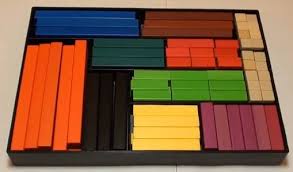 Caleb Gattegno
 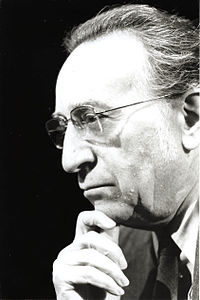 invented Cuisenaire rods and they became incredibly popular during the 50s and 60s.
His rods and teaching method truly changed the landscape forever in terms of teacher expectations of children’s maths understanding.
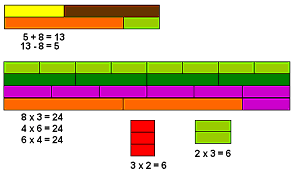
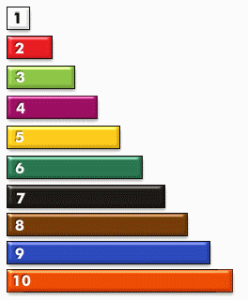 They also used their rods to build structures and make pictures. Children loved them and they all had a set in their desks!
https://www.youtube.com/watch?v=0vbpeKYH3z8
Of course they are but one resource in an ever-widening plethora of methods but it is one we can depend on to deliver results!

“Hurry. Get that done!”
“Quickly -don’t waste time!”
“Get a move on!”
“Just get it done!”
“No time for that. Move on!”
“Now! I said NOW!”
How often do we say similar words?
No wonder kids are spinning with no ability to stop, focus and slow down enough to try their hardest.
Why the need for this crazy pace?
Does speed add to the quality of life?
I doubt it!
We jerk our kids like puppets on strings and give them no time to play, reflect, think or daydream and them we act surprised when they show symptoms of ADHD! Then of course we often drug them.
Martin Whitely wrote an excellent book about this:
http://speedupsitstill.com/
I watch the new children at my centre work at a very fast pace and throw down their pencils, “Finished Vicky! What do I do next?”
I don’t have to tell them.
The regulars look up and answer patiently, “You daydream. It makes you smarter.” (This comes from a famous story from Einstein.)
We actually have to demonstrate HOW to daydream. Can you believe that? These kids have lost that ability!
Some years ago I told an EQ4KIDZ group of children in Singapore that they had all passed the course and could finish their workbooks at home in their spare time.
One child looked at me in a puzzled manner and asked, “What’s spare time?” He speaks English all the time and understands “spare” and “time” but has never seen or imagined how these concepts could be joined together!
It is NOT OK at keep treating our children in this way. Their lives do not need to be stuffed full of endless activities. They need more of the verb “To be.”
Let’s all put some empty spaces in our schedules this week- for ourselves and for our children.
Our minds, bodies and spirits will thank us.
Check out the link below for more ideas.
https://www.psychologytoday.com/blog/fixing-families/201101/the-frazzled-child-9-reasons-slow-down
 There are emerging concerns about children’s high stress levels during NAPLAN testing but the hidden, huge concern is massively increased teacher stress load and this is being largely ignored. Teachers are deliberately staying quiet and not commenting in the media for fear of their jobs.
We conduct a great deal of professional development around Australia with thousands of teachers and I can assure readers they ARE experiencing severe stress. Their time is taken up with administering and marking many practice tests – especially in term one where they get kids ready for this testing. Traditionally this was the term to thaw out Aussie kids’ brains from the long, hot summer baking and help them become receptive to the knowledge they will receive in the new school year.
Naplan years are now practising test papers instead and even “off year Naplan testing” is happening as enterprising companies have devised test papers for children in other grades.
Of course this is educational insanity and takes time away from good teaching. We are likely to drive our education standards down further as we know that quality teaching is the one factor that can make a difference.
Teachers simply cannot do their jobs as so much time is taken up with test preparation.
Any education system that uses testing as a major aid to check on levels of attainment is putting out a clear message- we don’t trust our teachers!
If the Government really does not trust teachers to be able to help children reach their potential we need to address this. Why this lack of trust? Does this lack of trust existing in other professions?
We need to honour our teachers, nurture them, show trust and provide the tools they need. A huge number of our attending teachers pay their own fees for our courses and report they have to buy their own JOLLY PHONICS and JOLLY GRAMMAR handbooks. Their salaries are not high- less than most professions and that sends a clear message- you are not worth it!
We can carry on down this destructive and negative pathway and increase teacher and student stress or we can look at truly successful educational models such as the one in Finland and start to trust our teachers, provide higher quality training for them and stop the massive waste of energy, time and money related to NAPLAN testing.

All I really need to know… I learned in kindergarten: Robert Fulghum
“These are the things I learned (in Kindergarten):
1. Share everything.
2. Play fair.
3. Don’t hit people.
4. Put thngs back where you found them.
5. CLEAN UP YOUR OWN MESS.
6. Don’t take things that aren’t yours.
7. Say you’re SORRY when you HURT somebody.
8. Wash your hands before you eat.
9. Flush.
10. Warm cookies and cold milk are good for you.
11. Live a balanced life – learn some and drink some and draw some and paint some and sing and dance and play and work everyday some.
12. Take a nap every afternoon.
13. When you go out into the world, watch out for traffic, hold hands, and stick together.
14. Be aware of wonder. Remember the little seed in the Stryrofoam cup: The roots go down and the plant goes up and nobody really knows how or why, but we are all like that.
15. Goldfish and hamster and white mice and even the little seed in the Styrofoam cup – they all die. So do we.
16. And then remember the Dick-and-Jane books and the first word you learned – the biggest word of all – LOOK.”
― Robert Fulghum
Kindy teachers are different!
They HAVE to be well planned and above all they HAVE to love children – a lot. They certainly don’t do it for the money. They are never paid enough to cover what they do!
All of us can learn from watching our immensely creative kindy teacher colleagues. imagine if all teachers taught like kindy teachers- children would be happy, be allowed to develop their strengths and learn in ways that suit their learning styles.
What a radical idea!
They have got it right and we need to study them and learn from them.
Be there. Be present. Love your children. Expect the unexpected and FLOW!
If you teach like a kindy teacher you will probably have premature grey hairs, lots of “crinkles” and have a desperate need for sleep. But be assured- you have more effect on your students than anyone else.
I am sure God has a special place in Heaven for kindy teachers- huge comfy beds, warm scented baths and trashy magazines with wine and very good chocolate!
What you do MATTERS and we admire you greatly!


