![spot8[1]](https://phonics.raisingpath.com/wp-content/uploads/2015/06/spot81.jpg)
It’s that time again! Time to judge the progress of our children and bring a light to the twisty paths of learning for each child. It’s REPORT time.
Language is so important at this time. We can be sharp, critical, negative and judgemental or we can be over-positive and brimming with praise or avoidance of the real issues.
I prefer the middle road. Many years ago I encountered the 2 STARS AND A WISH thinking and have tried to live by that. When asked my opinion of anything at all I like to point out the strengths and the weaknesses as I see them and to also offer CONSTRUCTIVE STEPS TO IMPROVE.
We all need that- what are we doing right? What is wrong? How can we improve?
To write a report we need to really KNOW a child. I have seen so many reports that basically leave parents feeling their child will never be able to excel at ANYTHING and others that simply tell lies and insist all is well when it’s not.
Let’s tell the truth but importantly, let’s tell the WHOLE truth.
Children grow and change and what on earth is the point of making a quick judgement that may become a self-fulfilling prophecy and does not allow for positive change? It is better to stick to the fairer, kinder but honest road and point out strengths first, weaknesses next and then ways to improve.
When we teach we NEVER know who is on the mat in front of us. There might be a future PM of Australia, a future talented inventor, a medical scientist who will find a cure for cancer or a genius master criminal in that squirming, creative mass of children by our knees!
So at this “judgement” time let’s treat them with kindness, care, honesty and positive encouragement.
After reading of what the children of Korea have to endure, their high suicide rate and then watching the revealing and dreadful method of attending “hagwons” or cram schools and sleeping in class I am moved to deep sadness for the children and young people.
Life is not just about success and going to the best university or making loads of money. The value systems inherent in these concepts are empty and twisted. Children need better than this and we know it.
I recently saw a TV program about rich Chinese kids are being taken to weekends of over the top total luxury to get them to crave these creature comforts and the high-life and learn about making money. What on earth will those kids be like when they grow up? Unfortunately we know the answer to this question.
We have parents who ask us not to praise children because it will stop them trying. Many years ago I had a child who was almost suicidal due to this parenting approach and had to have years of therapy to regain a positive approach to life.
We have to stop dumping our sick, valueless and contorted ideas of “success” on children and encourage them to grow, improve and be the person they were meant to be. Children are not designer handbags to be touted about. Go save up for your Louis Vuitton if you want but LOVE, CARE, and RESPECT your child and learn to appreciate them for who they are- not for who you want them to be!
As I begin reports today I will try to keep all these thoughts in front of me and most of all use any criticism to show how we can BUILD not tear down.
EQ IN MATHS
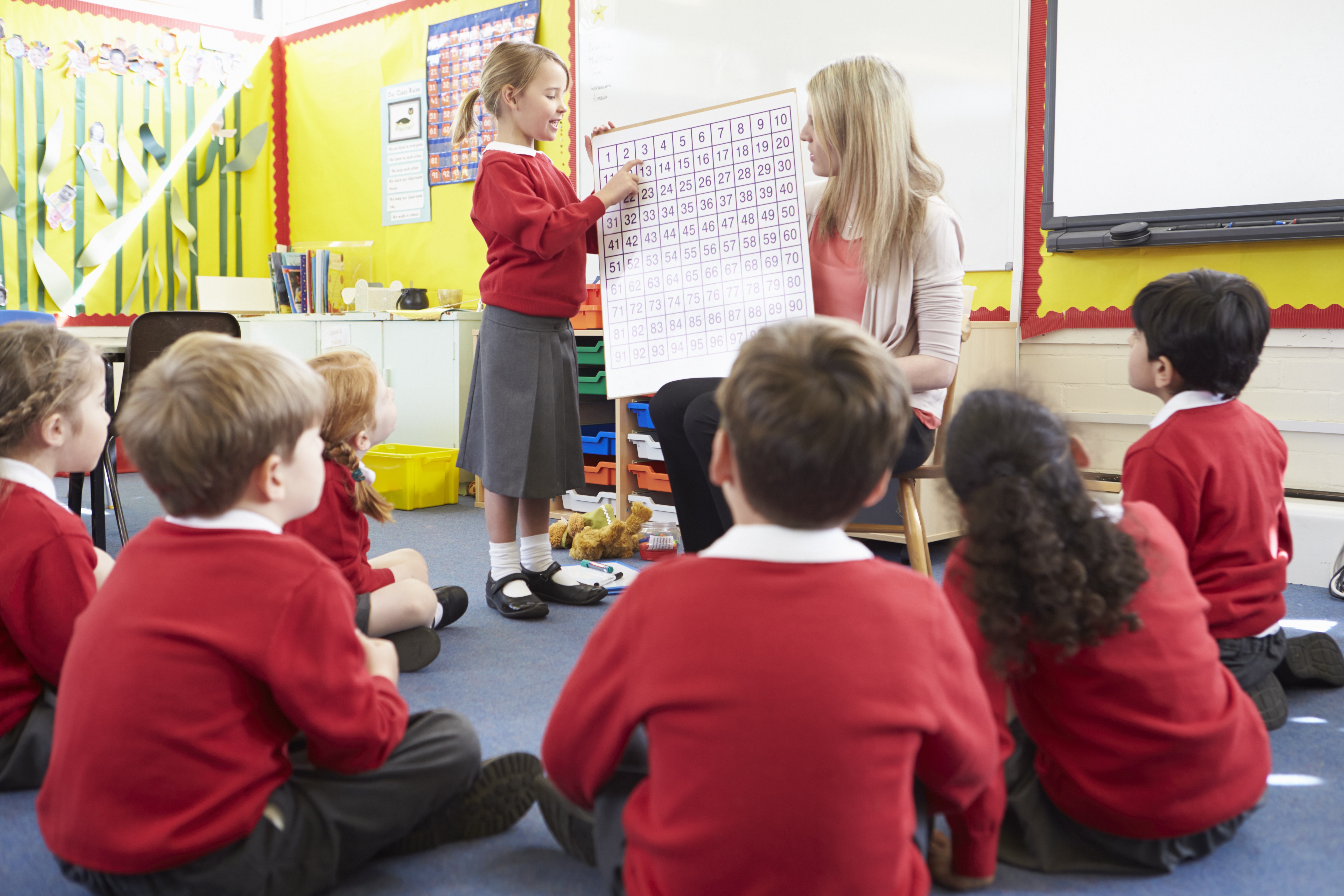
I watched a maths lesson yesterday at ICE.
It involved some pretty difficult 2/3 step problems based around our SPACE theme and Kelli commented quietly to me that we might need some easier examples for some of the children.
I suggested to Kelli that I put together some easier options and she observed for a while and wisely chose the harder option- to help the kids struggle and overcome.
She didn’t just teach them about maths with 2-3 processes- she taught them resilience and determination. Kelli taught them the value of collaboration and that we can All excel when we throw our hearts over the bar.
The children were so proud of themselves and we were all left feeling we had struggled together and WON- a great feeling for teachers AND children!
Well done Kelli- that is MASTER TEACHING!!! A few attitudes were changed and who knows- maybe some career options opened up?
HEAD IN THE CLOUDS

I am writing this somewhere just north of Australia while idly staring at amazing clouds! As usual up here, ideas flood in because I have created a space- a vacuum for creativity to fill!
So often as teachers we say to children, “Get your head out of the clouds!”
We want kids to be HERE and NOW and with us and not daydreaming but we have taken this too far.
Attention to important things is crucial and we cannot teach effectively without it BUT there must be times when kids have let their attention wander and to wonder, imagine and daydream.
Children who have more time for imagining and daydreaming will be able to think more creatively and generate visual images that help with planning, innovating, seeing new possibilities and writing.
So when can they do this? “Not in MY class!” I can hear you comment! Well- I agree. Not in mine either. BUT – if SOMEONE has let the kids daydream just before I teach them, I have more chance of harnessing their attention and getting them to think creatively.
So, I now always plan a simple, fast art activity just before our skill lessons and it achieves the following:
Helps the kids relax and listen
Allows them to reflect, wonder and process any worrying emotions
Switches on the WHOLE brain so they are ready for new information and problem solving.
Try it. It works. It takes a little time and effort to generate creative activities that don’t take too long but it is ALWAYS worth it! We have set up a Pinterest FAST creative activities so please follow and use!
https://www.pinterest.com/victoriacarlton/fast-artcraft-activities/
Motivation Momentum
![Teacher-Stickers[1]](https://phonics.raisingpath.com/wp-content/uploads/2015/06/Teacher-Stickers1.jpg)
I have a new FIT BIT. It essentially monitors my steps, vibrates when I reach 10,000 steps and has made me (In 1 week) walk up stairs instead of escalators, walk twice as far as usual and doggedly walk and walk till I feel that magic vibration on my wrist.
I have been running workshops for teachers and children in Singapore all week, so not so hard to get to 10, 000 steps but I return to Perth today and already planning how I will factor in daily exercise.
The point is, this purchase WORKS because it gave me a vibration on my wrist every night with a congratulations message as well as a MARATHON badge. Anyone who knows my sporting and exercise record would know there is not a lot to speak of but ONE WEEK has changed things. Of course it will now be up to me as to whether I will make lasting changes to my lifestyle and hopefully I will.
If we take that as a successful strategy for behaviour change and apply it to children, some very clear points emerge.
Many people say we should not give external rewards. “Rubbish” I reply to that.
Children LOVE stickers, badges, certificates, the occasional sweet treat and would definitely do their homework if some enterprising person invented a HOMEWORK FIT BIT or read more if they had a READING FIT BIT!
Children want to be recognised and thanked for their hard work. In order to change behaviour we must go back to the Skinner model and make sure we have a sufficient supply of “carrots!”
http://www.livestrong.com/article/105661-behavior-modification
Once the behaviour is changed, the number of carrots can be slightly lessened but never taken away completely.
Would you work for no salary?
I am all for the charts of behaviour, reading books read, stars for good behaviour and achievement and effort certificates. They work!
I care about kids greatly. They are my life’s work and if a few cheap stickers and certificates can change their lives for the better I am on the front of the queue to buy!
Long live the FIT BIT and may someone invent one to motivate kids!
MUSIC IS THE SWEETENER FOR LEARNING DIFFICULTIES!
 “Just A Spoonful of Sugar Helps The Medicine Go Down In A Most Delightful Way”
Music can help increase learning for children, particularly those with autism and other learning musicdifficulties.
Music activities provide much needed sensory input through mind and body stimulation at the same time to engage learning. A well-designed music programme will stimulate different parts of the brain at once to process rhythm, emotion and movement, while encouraging creativity, experimentation and exploration in a most delightful way!
Music helps the whole child engage both physically and mentally especially in the early stages of reading and decoding text. Because tempo, pitch and beat are crucial elements in learning to read, children who have been exposed to music demonstrate a higher ability to anticipate words, rhythms and concepts when learning to speak, write and read.
Exposure to singing, dancing and playing (a variety of instruments) help to develop and sharpen proper voice control, motor planning and fine-tune fine and gross motor skills.
Children who experience learning difficulties, if encouraged to participate in music lessons, are more easily able to practice and assimilate new concepts in grammar and punctuation .
This is key in allowing the child to engage faster and scaffold their learning more effectively.
Children with learning difficulties, in particular on the Autism spectrum, who are part of a consistent music program also demonstrate increased focus, more voluntary attention, better memory, increased social interaction and greater ownership and enjoyment of their literacy journey.
When a child with learning difficulties experiences success in music, this leads to increased self-esteem, effective fine and gross motor control, a greater awareness of the world around them and better social and communication skills.
Music can also enhance discipline and move a child towards a more positive, affirming attitude while giving them a sense of pride in their work.
Music is a means that enables a child with learning difficulties to show their emotions in a creative, non-verbal way they might not otherwise be able to express. Where once there was frustration anxiety, unhappiness, struggle and resulting behavioural difficulties, music is the spoonful of medicine that provides healing for a child experiencing learning difficulties and gives them a sense of achievement and purpose!
FIND THE FUN by Kelli Gander, Guest Blogger
Find The Fun
You can’t argue w ith Mary Poppins, who we all know is ‘practically perfect in every-way’ and there is more than one lesson to be learned from the timeless tale she has to tell. This one, for me as an educator, is the most important of all.
In every job that must be done
There is an element of fun
you find the fun and snap!
The job’s a game
This has become my teaching mantra and I endeavor to ‘find the fun’ in every lesson that I teach. Imagine if kids got excited about the times tables, eager about spelling, enthusiastic about parts of speech! Learning does not have to equal boring, we just have to find the fun for our students.
How do we do this? The same way that Mary Poppins did, with a game! Games not only provide the hands on experience that children need to be effective learners but also makes even the most boring concept a whole lot more exciting.
A simple pack of cards becomes a speed game to make number bonds to 10 or a spirited competition to multiply the face values. Older children use them to learn about adding, subtracting, regrouping and multiplying. Younger children use them to sort, match, do shape work and learn 1-1 correspondence. Games do not need to cost you money either, there are so many fantastic sites where enthusiastic and dedicated teachers post and share their amazing, free ideas, on how to create that ‘element of fun’.
A treasure map is a perfect way to teach children about prepositions. Lego is an awesome way to learn about volume and measurement and you would not believe what can be done with a paper plate in terms of fractions and equivalent fractions!
We often do this naturally with younger children but our older ones do not outgrow this need for ‘fun’. In actual fact, the sometimes dry topics that are curriculum essentials, would receive much greater benefit from applying a ‘games based’ approach.
So step away from that smart board. Put down those worksheets and open your mind to games. We know it worked for Huckleberry Finn, when he managed to cleverly persuade his friends to trade him small treasures for the privilege of doing his work! Just find that element of fun and snap! The job’s a game.
IF MUSIC BE THE FOOD OF LOVE. . .by Guest Blogger Joanne Sundra
 IF MUSIC BE THE FOOD OF LOVE. . .
Think about the first steps you took as a child. You were a baby when you first started walking and even though there were a few wobbles and you fell over more times than you stood up, your parents clapped and cheered. They smiled and encouraged you to keep trying.
Reading music and singing and clapping a rhythm is the same. Children are instinctively perceptive and will often listen to music to identify familiar melodies and rhythms. Music then grows out of an attempt to make sense of the world around them. Parents can encourage their child’s listening and focus by setting the scene with a favourite song so the child is able to instantly recall the sequence of events in the story. Children just beginning to read will often join in with singing their favourite song, even making up the words as they go…
When teaching children their ABC’s, learning occurs best when set to music. Music is everywhere, from memorable tunes in television shows, to background music played in and children learn to associate the beginning of their favourite television programme with the first chords of the song.
Young children are naturally wired for sound and it is so important that parents harness this ability by allowing children to experiment with rhythm, notation and sound. Overturned pots and pans, ladles and soup stirrers magically become musical instruments for the afternoon before returning to their more traditional, somewhat boring, role as dinner utensils by 5 o’clock. Mirrors and hairbrushes have the power to transform into a veritable stage-setup at bathtime, only to find their powers once again harnessed to the top of the tallboy by bedtime.
Music creates happiness like no other medium can. Whether it is singing into a shampoo bottle, dancing like no one is watching, acting out a play for Grandparents Day, or simply belting out a tune to bring a smile to mum’s face on Mother’s Day, music is a whole concept that fosters play, fun and laughter.
Greater mindfulness, improvement in memory skills, better experimental writing, reading with purpose are all skills being introduced and honed through the application of music. If music in the home can create a fun relaxed environment for harmony, cooperation and bonding, then play on!
Music MATTERS! by guest blogger Joanne Sundra
 “Music gives a soul to the universe, wings to the mind, flight to the imagination and life to everything.”
– Plato
Teaching music to kids is CRUCIAL- not an optional extra!
When learning music students learn to let language flow and improve auditory memories through listening to beats and copying rhythms.
Repetitions when singing charted songs improves word recognition and reading fluency.
Children LOVE to make up simple songs about their daily happenings and this increases their MUSICAL INTELLIGENCE.
They can take favourite books and poems and sing them. (Just like in the popular TV show Spicks and Specks)
.
Music forms a bridge of understanding so children may learn about the world through stories and songs.
Many concepts are learned and deepened when children learn nursery rhymes and common songs.
Children with speech problems such as stutters, improve when given daily music practice.
Many children can remember facts about tables, grammar and spelling rules by singing simple songs written to help them revise these concepts.
The music and maths intelligences have many connections and the sense of order and harmony in music is expressed in the patterns and order of mathematics.
Music is an effective stimulus that affects students’ emotions and makes the memory work more effectively. Think about the memories that flood in when you hear favourite pieces of music.
Elderly people can recall first loves, people with alzheimers can be helped to improve memory with regular music sessions.
Music is a POWERFUL learning tool!
By using music in the curriculum, teachers create an environment that is conducive to learning, stress is reduced, and the stage is set for SUCCESS!
We will be commencing JOLLY MUSIC this term and teaching children to listen, concentrate and respond to simple instructions. They will learn to use their voice as an instrument and auditory memory, phonological awareness and understanding of rhyme will improve.
There is no doubt that maths and literacy skills increase when carefully sequenced and well – researched programs such as JOLLY LEARNING are used with children.
All CHILDREN DESERVE THE CHANCE TO LEARN MUSIC!
Tomorrow we will write about ways parents can effectively integrate music into their home environments to promote harmony, a sense of fun and improved learning outcomes.
Call 92714200 or email iceinfo@iinet.net.au for more information about our programs.
I am bilingual, I can speak Maths! from Kelli Gander, Guest Blogger
I am bilingual, I can speak Maths.
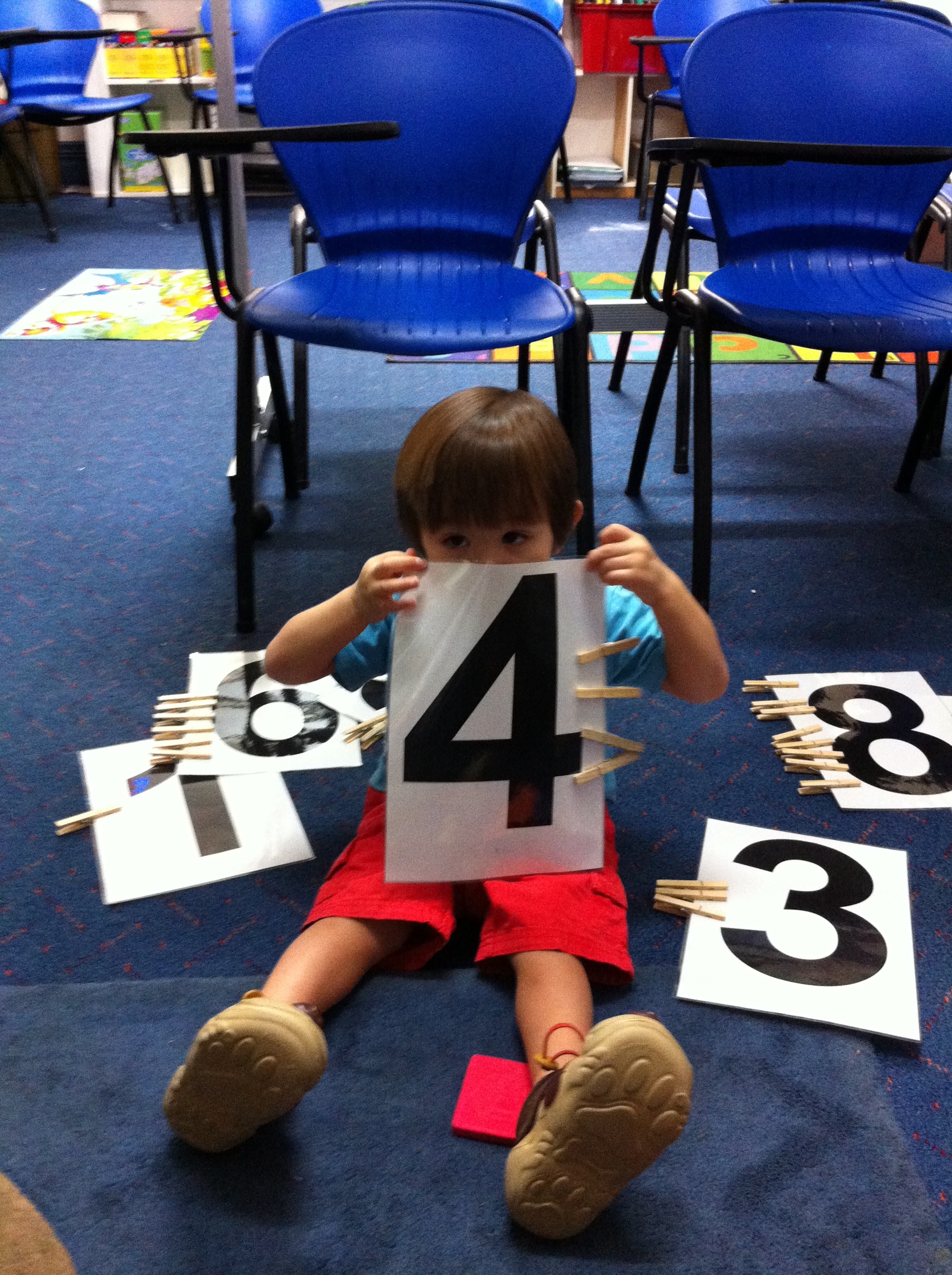 Not many of us master a second language especially at just two or three years of age but this is exactly what we ask of our children when we introduce maths without a good, hands on, interactive program.
Like a jumble of ancient hieroglyphics or complicated Japanese Kanji, those lines on a page hold little meaning for the beginner and we need to decode and demystify them by linking them to all other aspects of their learning.
We might not remember all the words but we know that it was “five little ducks” that went out one day, over those hills and far away and that the “hungry caterpillar” ate through not one, not two but through five oranges!
It was Confucius who said “I hear and I forget. I see and I remember. I do and I understand” and it is this principle we need to take with us when teaching math, not just to our toddlers but to all of those children who do not hold a high maths/logic intelligence.
What is a 6? What does it look like (can we draw it, can we pile up 6 objects), what does it sound like (can we clap out six beats, can we blow a whistle six times) what does it feel like (can we jump on the spot six times, can we roll a six out of clay). What happens when numbers go up, do we have more or less, is our pile getting bigger or smaller are we jumping more times or less times?
This approach extends beyond the toddler too. How many lollies do I get if I share them equally among my friends, what portion of the cake will I get if I divide it among eight people and is it the same if there are six of us? How many will I need altogether if my 3 guinea pigs need four carrot sticks each and how long will I be revising if I spend 20 minutes on four subjects and start at 4:30 in the afternoon?
Maths is all around us all the time. It is in the songs we sing, the books we read, the games we play, the order of our day. We don’t learn to drive a car, bake a cake or teach a child without ‘doing’! We can help all of our children to be fluent speakers of maths if we remember this simple fact and let them ‘do’ as they learn.
NEW START for brave kids!
NEW  START FOR 16 KIDS!
On Good Friday we launched the EASTER NEW START program in Singapore.
What amazing, receptive kids they were!
We went through a gradual process, learning to regularly express GRATITUDE, reviewing our SMARTS, stimulating our brains, writing AFFIRMATIONS, writing goals and much more!
I have learned that children DO want to be motivated, and reach for the stars. They often feel hopeless and don’t know where to start. These kids were SO receptive and I observed so many acts of kindness from them throughout the day. Most children did not know each other well before the workshop- many had formed firm friends by the end!
I had children of all ages in this workshop and they were fascinated to learn more about their brains and find out the RULES FOR GETTING SMARTER.
Of course the hard work starts now and I sincerely hope the children will continue to use these KEYS TO SUCCESS.
Well done children! It was a privilege spend a day with you!
We will be holding a similar workshop with children in Perth on Friday and I thoroughly look forward to it!


