
DODGY PEDAGOGY

F grade and a sad smilie, written in red letters in a spiral pad, shallow DOF

Over the last week I have been given at least a dozen reports and copies of test results to read and hardly any of them have made sense!
I have seen crazy results with one parent being told- “Your child only reached stanine 3 in the ________ test.” Unfortunately the parent had no idea of what this test meant, let alone the results.
This over-testing of children and labelling has reached epic proportions. The race is on to somehow put every child in a box with a negative label.
Children are not allowed to learn differently.
They must all be the same.
Why not put Ritalin in the drinking water or simply give every child a lobotomy at 2 years if they show signs of curiosity and interest in the world around them!
I have read reports that label realy bright children as C – (satisfactory) and then go on to give the place in class. These stupid strategies were last seen when I was at Primary school and that was rather a long time ago!
Our kids are puzzled, depressed and starting to give up. Many children have told me they KNOW they can never reach a higher score than C.
The education system is choking for lack of positive air. We are shaking the lifeblood from our students and killing their enthusiasm. This is not the accountability that was much needed. Children’s ability, attainment and progress cannot be simply measured by scores. It is far more complex than this. We are treating our children like machines.
It is stupidity of the highest order and is actually harming children.
Who would dig up a healthy plant to keep checking it is growing?
Yet- this is what we do but this crazy over-testing of children is achieving the same results- the love of learning will die!
The ABC of Child Whispering: L IS FOR LOVE OF LEARNING

heart learning

If we want children to engage and reach their learning potential, they have to ENGAGE and LOVE the process.
That does not mean that learning does not get hard. In fact, children can really enjoy the bumpy parts if they feel supported and believe they CAN solve problems. This means that we have to use child-friendly themes and ensure we differentiate the learning. It can never be one size fits all!
This also means teachers need to research their children’s interests and to tweak the programs so ALL children can experience success.
It might mean asking for slightly less written responses or cutting back on homework requirements.
For very able students more complex reading material can be chosen. Luckily, with the huge amount of material available on websites devoted to children’s interests and text and work books readily accessible, this is not hard.
It is essential that parents understand their children are all amazing gifts and definitely do not all respond to the same teaching styles.
Some children need to move more as they learn and often respond well to visual stimuli. Others can easily concentrate and take in information in auditory ways.
We regularly conduct assessments for children to determine learning styles and both strong and weak intelligences. This allows us to offer more targeted tuition that will really meet students’ needs.
Parents and teachers who would also like to assess children’s predominant learning styles and strengthen weak intelligences can order a copy of ALL KIDS ARE SMART from us. (Order by emailing victoriacarlton@iinet.net.au) This book will provide testing tools and give you a HUGE amount of information for maximising children’s progress.AllKids are Smart Front Cover
Try to keep your tension away from learning situations. We know students learn more when relaxed and are therefore open to new information and experiences.
We can ALL love learning as long as we perceive it as possible!
Plan plenty of learning games and “hands-on”, active learning experiences. You will be rewarded by happier, more motivated students who feel EMPOWERED and LOVE their learning experiences!

The A-Z of Child Whispering: K is for KINDNESS

we_love

K is for KINDNESS
We use this word so easily but when you really analyse it – what does it actually mean?
Generally – friendly/generous and considerate are adjectives we think of with KINDNESS but I think gentleness is in there too.
I gave a workshop at the Singapore Kindness Movement conference one year and was encouraged by the positive response and interest.
Teachers and parents are really searching for ways to teach KINDNESS and I guess children do not always find the world to be a kind place!
I was chatting to a student last week and asked him about 1 change he would like to see in the world. WORLD PEACE was his choice. He told me how he sees the fighting and hatred on the television and how bad it is. He then asked me about MY childhood and I was catapulted back to a time when we didn’t see these hateful images on our screens every night.
It was a time when my Mum told me to run along after school and not to return till dinner-time. So, off to the river we went to climb trees, fall down, fish, slip in freezing streams and generally (mostly) get home in 1 piece to eat and off to bed with a book.
Imagine parents being able to say that to kids these days?
Recently I returned to that river and NOTHING has changed! Gentle village, village school, quiet lanes, Saxon Church and giant yew trees- feeling of indescribable peace,
Of course the world was not a totally safe place then and I certainly experienced my share of unkind teachers and children. This is part of normal growing up.
However, we were shielded and allowed freedom to think, be and develop.
I can’t help wondering what these horrific images in the media might be doing to young people? I don’t believe we can hide our children from the media forever. The student I was chatting with was 14 and very savvy with digital media, websites and the like.
But he was worried enough to want to chat about it.

So how can we teach our kids to be kind in this society?
We just DO it– one kind act at a time. Leap in!
I have always been a fan of the Random Acts of Kindness movement. https://www.randomactsofkindness.org/
But let’s model it and teach it in a way that is not always random. How about some deliberate PLANNED kindness!
Let’s set out every-day to be kind, model kindness too children and encourage them to practise it on a daily basis!
So – How do we teach kindness to children?
Start by being kind to yourself. Take some time each time to think and BE with yourself. Get back into your body and stop spinning!
Allow your children to do the same. Children crave SPARE TIME to just play and BE.

Be kind to your children- not indulgent. Look at this amazing website for practical examples and be inspired by the incredibly short but powerful life of Martin Richard– a real believe in peace and kindness. His message will live on forever!

Kindness: How You Can Teach Children to Care for Others

See this link for 14 amazingly practical ways to make kindness a way of daily family life! http://www.parents.com/parenting/better-parenting/advice/14-little-ways-to-encourage-kindness/

We have made KINDNESS a real part of our EQ4KIDZ program and we often have a minute of KINDFULNESS – where we sit with dimmed lights and consider kind acts we can do for each other.

We CAN change the world- 1 kind act at a time.
Children are wired for empathy and get so much satisfaction from BEING kind rather than just receiving kindness. Big people too!

PAY IT FORWARD for kids


The phrase Pay It Forward in red text on a yellow sticky note posted on a green notice board

Last night I watched the classic 2000 PAY IT FORWARD movie: https://youtu.be/TlZDDACt8Nw

If like me- you missed it- watch it today! Martin and I ended up blubbering on the couch but at the end decided that really PAY IT FORWARD is an amazing concept. I know there are various organisations, websites etc out there who organise this and we have used the concept in our EQ4KIDZ programs – especially with older children….. but somehow last night’s viewing has changed me. I want to consciously PAY IT FORWARD each day and help children to do the same.

I notice how excited our kids at ICE get when we talk about BIG IDEAS. They are fascinated and want to become involved. I am going to let this PAY IT FORWARD concept sit with me throughout Lent. (Always a good time for me to reflect!)

Then at Easter I hope to birth the idea to our kids in a really practical format.

What a simple concept. Strip away all the hype, publicity etc and just look at the idea. Imagine-  if we all gave 1 act of generosity a day- even a week or a month- and asked the recipient to simply pay it forward.

Seriously, the world COULD change. we could DO that! Before you call me a dewey eyed idealist- watch the movie and if you’ve seen it- watch it AGAIN.

DOUBLES BOOKS

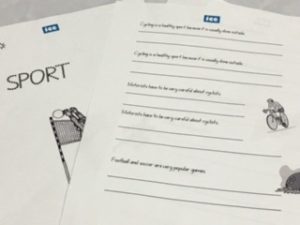
doublesThis idea began at a book burning!

I am not normally a fan of book burnings but this day I was busy burning old reading books in the incinerator when a child asked me if he could have one of the books destined for the fire!

This child was repeating Grade One in my class without a great deal of success! I tried to persuade him to take a more suitable (modern) book than the Beacon series, Kitty And Rover one he selected. But no! He wanted that one.

He looked at the first page- it said Kitty.
“What does this say,” he asked. I told him and then he saw it repeated again. Then Kitty was repeated on the next page, and he said (a little excitedly!) “Look Mrs. Carlton- it says the same thing.”
“Yes,” I replied thinking how boring it was!

Then he got to Rover. “What does this say?” I told him and he noticed it was repeated again and said the word.

I started to get interested. This kid hated reading and could hardly read a word. He continued reading and asking me and repeating all the way through dear old Kitty and Rover and guess what? By the time he had finished he knew what reading was and his literacy journey had begun.

All my strategies, wheedling, begging, soaking him in phonics, narratives, restructuring text and language experience had not done the trick. I was a so called literacy specialist but could not achieve the basic thing this book could do. I was humbled and saved the rest of the Beacon series from the bin!

A few years later I had a similar child- no success at all! I decided to try the strategy but with a twist. I used the child’s own language and got them to tell me about something they were really interested in. e.g. a sport, animal etc.

They dictated and I scribed or typed and repeated each sentence. The children then read every sentence (twice because I had doubled it!)

Then I started to use dotted script and they traced the words. Some children copied the words underneath and illustrated their books!

DOUBLES BOOKS were born!
Steps-
• Ask the child about their interests and help them to choose a topic.

• Get them to tell you- sentence by sentence.

• You type and then copy each sentence again.

• If appropriate they can trace the words, copy and illustrate.

They LOVE these books and after 8-10 books they are off and running!
If not- guess I could try TRIPLES BOOKS!

I will soon publish a few of these simple books about common topics that fascinate young readers but I still favour the approach where students dictate their own text, a teacher scribes and children read/trace and copy.

Try it- IT WORKS!

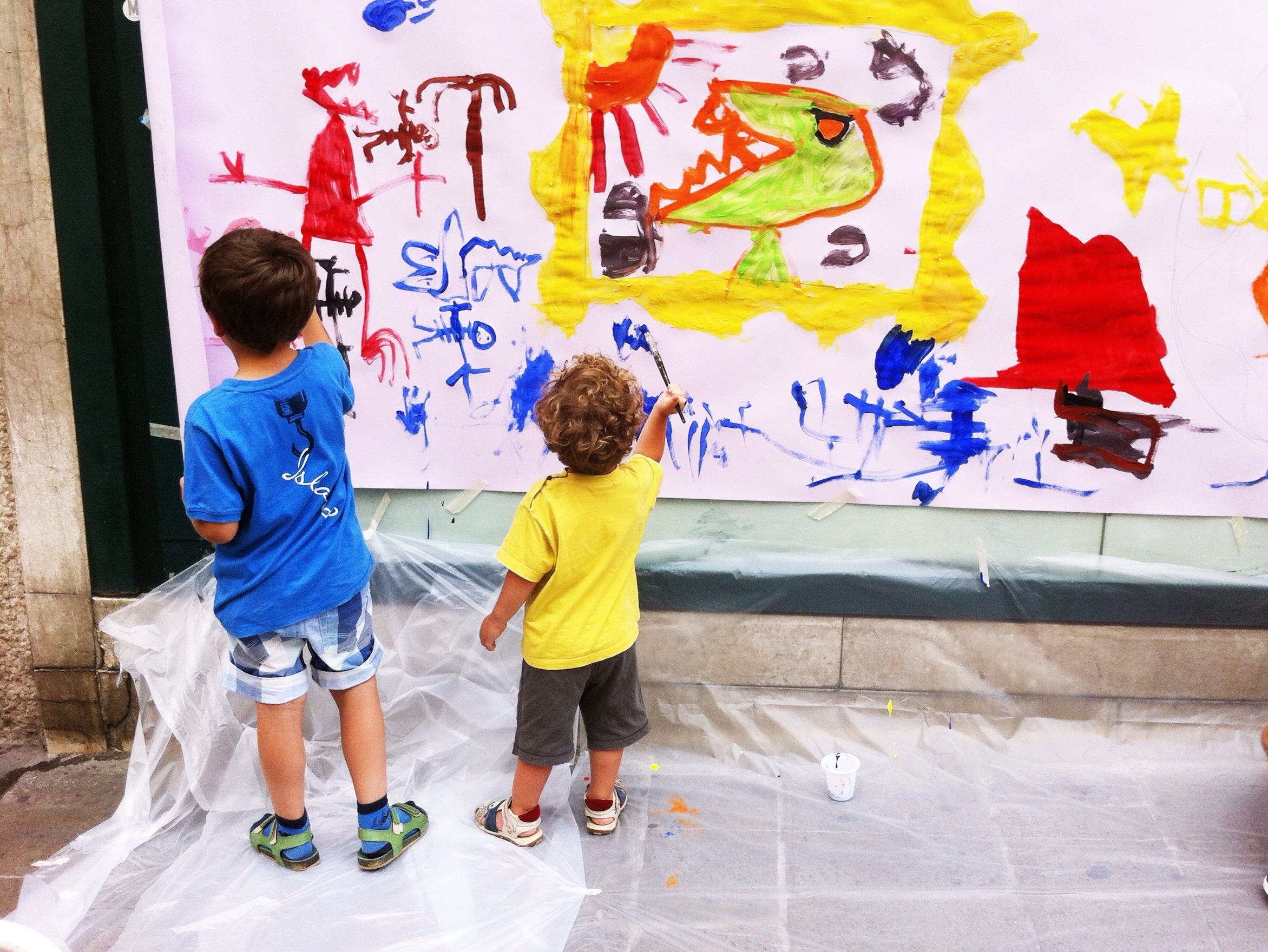
ART FROM THE HEART

Processed with VSCOcam with n1 preset

I woke this morning with that Christmas morning feeling you get when you are anticipating joy!
All week we have ART FROM THE HEART classes and I know the atmosphere at ICE will be peaceful, excited and yet strangely calm.
We do a little bit of art in every course we run and of course HEAPS of art in ART FROM THE HEART!
ART should always be from the heart. Art engages the left and right sides of the brain as children imagine, plan, organise, “feel” their way in, create and revise. I love to watch their faces as they engage in art- they GLOW and all concentration and tension issues seem to fly out the window.
Interestingly, the learning that takes place after art is ALWAYS deeper.
Sure issues of low self-esteem, lack of confidence and worries about it not being perfect surface but the art time is a great place for these things to come up and be dealt with. Teachers who help kids engage in art are really not just doing art- they are helping to grow more centred, creative and self-aware people!
Should we ALL be drawing/painting/crafting?
Maybe hardened criminals and terrorists should attend daily art classes! It truly seems to make for calmer, happier children so let’s try it on some big people.
I am starting an ART FROM THE HEART pinterest board today and will be sharing lots of techniques and ideas as well as displaying kids’ work. Please follow and share some of your own creative ideas too!
Let’s make this a week where we ALL indulge in some creative practices and share.

The ABC of Child Whispering- J is for JUGGLING

Confused schoolboy looking at arrows pointed in different directions,  back view,
Confused schoolboy looking at arrows pointed in different directions, back view,

We are now in January – the time of heat, fires and wonderful freedom for children.
I am fascinated by the amount of progress our students make during the holidays. They come in fresh, motivated and happy.
They are not juggling too many balls at the moment.
They can concentrate.
Many children we see at ICE are enrolled in 5/6 different after school activities and have NO time to play, dream, think or even get their homework done.
Why so many balls in the air?
Is it because we think our kids will be happier if they have all the so-called “advantages”?
Is it because we are frightened of children who might have some spare time? Are we frightened of our own children?
Children are so over-scheduled that when they finish a task at ICE they put their pencil down and quickly yell out, “Finished!” They are desperate for the next task- they do not know how to deal with the spaces between things.
Problem is- it is in the spaces that human beings get their best ideas and insights. Our poor overloaded kids have no spaces, too many balls in the air and unthinkingly grab a digital device to fill any spaces.
Are we all terrified of being with ourselves?
Many children are dropping balls and falling apart. They can’t juggle forever- they need time to be kids!
On behalf of the children we see- I urge you all to allow some spaces- for your children and yourself!

MY STUPID WEEK

anonymous man with blank face against dark background

I am having a week steeped and stewed in STUPIDITY!

Here are 2 examples-

Who are these faceless people called THEY?

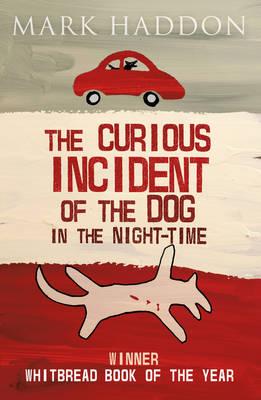
My wise -man book shop owner popped in this week and we had a long conversation about a book he had given me to read- a very thought provoking book called The Curious Incident of the Dog in the Night-time.the-curious-incident-of-the-dog-in-the-night-time
We were having a lively conversation about the nature of autism and one of my teachers commented that, “They have recently announced that even 2 year old tantrums might be a sign of autism,” and the inimitable Don exploded, “Who are these &^%$# people called THEY? They seem to be running the world!”

Actually he is right.
How often do we say, “They say………

We need to start thinking for ourselves.
If 2 year old tantrums are caused by autism we have an almost 100% autistic population so perhaps autism is the new norm. What stupidity!

Another stupid example:

I am currently conducting many assessments of new children and most are high achievers who somehow do not fit weird, preconceived ridiculous notions of what children should be able to do.
One grade one child demonstrated an aptitude for maths, great problem solving, understanding of place value and ability to  already handle many grade 2 concepts. He is apparently getting an F in mathematics.
How hard does a child have to work to get a decent mark?
How depressing is this for children and parents?
I am ok with an honest reporting system.
I am not OK with trying to put a label on every child and shove a defined mark on a living breathing, improving little human being. Our children cannot be pinned down to letters and numbers.

Very soon we will have a nation full of machine-like children who can only write persuasive texts (as required by our NAPLAN testing), don’t think at all and get Cs for everything!

We would not even treat our pets this way- let alone our children!
Thanks Don- you gave voice to what had been brooding in me for some time. Now I feel better.

Watch out the next person who says something stupid to me! I am likely to throw a whole container of fake snow at you.

Maybe it’s just the season for stupidity ….or maybe I am just too old to agree with these faceless “Theys” any longer!!

The A-Z of Child Whispering: J is for JIGGLE

happy jumping child in summer

Children are natural jigglers and wrigglers. They don’t stay still for a good reason. I am sure I am not the only teacher who has stared at her class and drawn a sharp comparison with a basket of wriggling worms! worms

They learn by moving, touching, pushing, pulling, moulding, grabbing ……. just watch a group of pre-schoolers at play!

This does not magically stop when they reach a certain age.
Sure their concentration span lengthens but even 10/11 year old need to move.

We are kidding ourselves if we think passive children sitting in desks doing worksheet after worksheet are really learning.

Learning can be interactive, challenging, messy, satisfying, frustrating, joyful ……… all within one lesson! Of course there is a place for worksheets. A well designed worksheet can help children to revise and deepen understanding. But- worksheets  will never take the place of a good teacher who can adapt the learning environment very skilfully and often quite quickly to improve learning outcomes.

If we force children to sit quietly for longer than comfortable they will often put all their energy into trying to do just that. For a child that is a bit like us wanting to visit the bathroom BADLY after the seat-belt sign is switched on for landing!

Wise Child Whispering teachers and parents understand this and ensure youngsters have plenty of opportunity to JIGGLE, JUMP, RUN, MOVE – children learn by moving!

Here are some really effective ways to include movement activities in classrooms. We use these regularly as part of Victoria Carlton Programs

  • Start each day with some movement education- either some Brain Gym or maybe the fantastic Harry Potter Yoga! If you do this you are stimulating their brains and helping some of them deflect some excess energy. https://youtu.be/R-BS87NTV5I2.
  • Allow your VERY jiggly children a stress ball or similar so they can squeeze and concentrate.
  • Don’t ask children to concentrate for more than 15 minutes without a stretch, quick exercise, change of activity etc.
  • Ensure you have plenty of learning strategies drawn from the physical intelligence area of MI so that children can learn while moving!
  • Try human sums! Children can act like human counters for various operations.
  • When children sound out words let them jump up and down or bounce a ball at the same time!
  • Practise word recognition and sentence structure by standing in a line and holding up words and punctuation marks.
  • Jolly Phonics and Jolly Grammar are incredibly effective ways for children to learn literacy skills and I am convinced that a large part of their effectiveness is due to the huge movement and activity component of the program. Ask us about training opportunities for these courses.
  • Allow plenty of time for art and craft as it calms children and the amount of learning increases.
  • (See my FAST ART AND CRAFT ACTIVITIES for ideas https://www.pinterest.com/victoriacarlton/fast-artcraft-activities/
  • Change the learning environment and displays often so children feel stimulated and enjoy exploring the environment.
  • Don’t always teach from the front- occasionally teach from the back of the class, have them out of chairs close to you (even big kids!), go into another learning area or even outside. To wake up children’s brains we can’t be TOO predictable!
  • Choose NOT to notice every wiggle and jiggle. Constantly stopping our teaching for very small lapses of concentration is incredibly annoying to other children and they start to lose the thread of your lesson!
  • Consider teaching some strategies to let some of the excess physical energy out! (Sort of like opening the steam vents on a cooking pan!)
    I teach my chronic wrigglers to curl their toes or fingers and then let them go. This gives a slight movement outlet. They can also tap quietly with feet.
  • Make daily MINDFULNESS time an integral part of your program. Children sit for a minute in silence, letting go of any worries and just emptying their minds. The quality of the learning after the mindfulness minute is easily observable!
  • Consider using our visualisations programs: Mind Journeys. We have over 50 of these ready for teachers and parents and provide examples on social media and the whole lot are available in our forthcoming MIND JOURNEYS BOOK. (You can pre-order this now) We have found that using this method to teach creative writing and thinking, has had HUGE benefits for children who normally cannot sit still for more than 5 minutes.

AllKids are Smart Front Cover


If you would like to know more about your own “jiggling worms,” their cocktails of intelligences and how to increase them, order our ALL KIDS ARE SMART book by emailing  victoriacarlton@iinet.net.au or if you are in SE Asia order through www.september21.com.sg

Children are MEANT to jiggle and move so let’s go WITH it in our learning programs rather than putting all our energy into trying to change something that is not actually meant to change! ACTIVE learning and ACTIVE teaching strategies work!

Leaky Elbow Syndrome

STORY STARTERS A-page-0

I often joke about how many of our students seem to have holes in their elbows and their wonderful ideas drop out before they hit the page!
I think we forget how hard it is for children to coordinate ideas, handwriting, concentration, punctuation etc and get ideas down.
My favourite lesson every day is WRITING and I am amazed as I see the creative process begin anew with each lesson.
The blank page is transformed- one minute it is empty- the next there are ideas, “wonderings”, creative “splats” and sadly sometimes one word and a pencil that just won’t move!
When I ask children what they would like to write they describe how they have many ideas and just cannot choose. Sometimes they have a HUGE idea and they are frightened to begin because it will take so long to write or they feel they cannot spell the words.
There are so many variables and teachers need a very full tool-box and a huge dose of understanding to be able to effectively teach written expression.
We sometimes use story starters- especially when children are tired and we are approaching the end of the year.
As children LOVE random choices, we often cut these up and they take one as a lucky dip. They act as “circuit breakers” so their brains can zoom in on just one idea!
If I give them too many topics to choose from they will get into the “kangaroo caught in the spotlight” syndrome and simply stop!
I have given you some of our story starters here and invite you to try them out. We are always devising more and at the moment we are working on a new Christmas set.
We share all our writing strategies in our writing workshop for teachers- ALL KIDS CAN WRITE. Please contact me if you would like to attend the forthcoming ones in Perth, Adelaide, Brisbane or Singapore.

error

Enjoy this blog? Please spread the word :)