Ready-get-set-go for the literacy adventure!


All parents watch with baited breath as their children begin their school careers and all hope for academic success and a life-long love of learning.

We watch closely for the signs that our child is truly reading and in many ways the first words read feel like a sort of “literacy magic” is being woven around our children. We relive our own school careers as we watch and nurture this learning process with our little ones.

There is much parents can do to help children prepare for success at school. It just takes a little planning and forethought to use the more “teachable moments” that occur naturally in our days.

In order for children to learn easily and maximise progress in literacy they must be at a specific stage of “readiness” for formal learning skills. Their bodies, minds and maturational clocks must be ready to begin.

In order to successfully learn early literacy skills, children need to develop phonemic awareness. This is simply the understanding that the English language can be broken into phonemes (the smallest units of sound). Parents can use a “silly, sound language “when talking to children to help develop auditory discrimination and help children hear all these parts. They can break their spoken instructions to children into units of sound so children clearly understand that all words are made of sounds.  E.G. M-e-ll-i-ss-a     p-l-ea-se    g-o   a-n-d   f-i-n-d    a  t-oy    f-or  b-a-b-y   -i-m!  Use this broken up speech often to emphasise the sounds in words. You can also ask children to give a sign such as a soft clap each time they hear a special sound e.g. “b” while you read them a story. These simple activities can have a profound effect on future decoding and spelling skills.

Reading stories often to children helps children switch on their inner “mind’s eye” and get ready for the imaginative component of reading and writing. We know that children who listen to stories improve their “linguistic store-houses” and this also flows over into comprehension and writing. As children listen to stories they add words to their spoken vocabularies, make mind pictures and start to comprehend narratives and thee ways they work. They also improve listening and comprehension skills.

Memory training is important for early readiness skills. Children need to develop their auditory and visual discrimination before successful reading and writing skills can take place. Auditory memory skills can be developed by insisting that children repeat instructions and then carry them out. Whenever you ask children to do a series of actions e.g. Get your school bag, pack your homework and go out to the car-ask your child to repeat the instructions. After a few months of this repetition they will automatically begin to repeat the instructions silently and it will facilitate your child’s ability to follow instructions at school.

You can also play memory games such as concentration with sight words or “I looked in my Grandmother’s trunk and I found a_______________” The next person says the same and adds one item and so on.

Children have to learn that repetition-although at times tedious and boring, is the key to basic skills such as spelling and multiplication tables. Children are helped with these skills by being able to perform a physical action such as bouncing a ball or jumping on a trampoline while practising the learning.

Visual memory skills are essential for effective reading skills and can be developed by asking children to compare pictures, look for differences, play flashcard games such as Snap and match up flashcards around the house. E.g. You can put signs on common objects –This is the fridge or bathroom-and children can match up their flashcards. This simple activity will really boost beginning reading skills and acquisition of sight words.

A knowledge of the alphabet is so important and has been demonstrated to be one of the key indicators that children are ready for formal learning. This can be developed by children saying the alphabet in different voices-loud/soft and maybe jumping/hopping as they say them. Ask children to trace the letters in bright colours, model the letters with plasticine and draw the letters in the air.

Both fine and gross motor skills are very important when children begin school. For successful printing to take place fine motor skills need attention. Allow children to cut, colour, paint and manipulate equipment and thread beads. It is a good idea to establish a “creativity box” full of recycling materials for making things and general enjoyment. Make sure you  include scissors, scraps of paper, materials and paints, crayons and markers.

Appropriate gross motor skills are crucial to learning. Children need to have the requisite balance skills to successfully sit at their desks and not continuously back and forth search in for a centre of balance. Take your children to parks and playgrounds to help them develop these all important skills. Well developed balance skills will help your child to be able to sit and listen well and concentrate.

They also need to be able to cross their midline with facility and so simple exercises where your child touches their left hand to their right knee, right hand to left knee (this can also be done while skipping, and forwards, backwards and on a small trampoline), will develop these essential midline crossing skills.

Do remember that if your child is showing tendencies to be left- handed, it is imperative you do not change this. Children can develop directional difficulties and speech and language problems if they are forced to change handedness. Do remember that many of the greatest thinkers in history have been left-handers and that there is a strong possibility of very strong creative skills being developed by these children.

Eye muscles need to move efficiently. Children cannot read if they cannot move their eyes successfully from right to left, and be able to copy from the blackboard-focusing and re-focusing as they complete a copying exercise. If children are not encouraged to play outside and use their eyes for looking near and far, and spend a great deal of time watching TV and playing electronic games, then these skills may not be well developed. Tracing a “lazy eight” in the air will help a great deal with this. Ask your child to imagine a big, fat eight laying sideways in the air (like an infinity sign) and then trace around it, starting from the middle and going up to the left. You can also draw large “lazy eights” on scrap paper for children to trace around in bright crayons.

Listening skills need to be at an appropriate level. It is vitally important that children can listen to instructions and carry them out in an exact fashion.  You can help this by talking to your children every day at the dinner table and ensuring the TV goes off at family meal times. Families that converse properly and really listen to each other, really help young children to learn the importance of listening. Listening to music and singing simple songs will help listening skills to develop.

Awareness of rhyme is important. Read nursery rhymes and nonsense rhymes regularly. This will increase the children’s sense of rhythm and rhyme- two important components of the early reading process.

There is an emotional component to the development of early literacy skills. Children know how you feel about their reading and will want to make you feel happy. They sense parental anxiety and then become stressed and even more unable to reach the high standards you may be setting. It is important to realise that all children have an individual maturational clock that ticks away until they are completely ready for the literacy process. Displaying anxiety and disapproval will only hold your child back and further delay their success. Trust the process, enjoy your child’s early attempts and celebrate every success together. All children learn in different ways and rates so do not compare them to their siblings and above all-soak them in books and model the literacy process yourself. Let your children see you reading regularly and perhaps writing in a personal journal. If they know you value literacy, they will also feel the same and the wonderful, magical literacy journey will begin!


The ABC of Child Whispering: R is for Rituals

ELVES, WISHES AND SPELLING!

Rituals and celebrations are very important for children. They love the “wheel of the year,” and are fascinated by old traditions. They help children feel grounded, part of the community to understand their connections to the past.

This week and next we are celebrating this MIDWINTER time with a veritable festival of learning activities. We have even obtained a fake log fire to add to the atmosphere!

We tell the kids the old solstice legend of people hanging their wishes from trees for the elves to see and hopefully grant! They are keen to do the same so we will hang our wishes on our learning tree.

We are “stretchy” with our solstice term and apply it for 2 weeks!

We also tell them that elves HATE spelling mistakes and don’t read wishes that are misspelled!  What a change- they all check their spelling carefully, check in with teachers and use dictionaries.  have a feeling these spelling elves are here to stay at our centre.

Last year I was fascinated to note their wishes. Many asked for gifts for their families. One child wished for immortality. A few asked for happiness and peace.  Can’t wait to see what they wish for this year!

Here are some of our activities- they can easily be adapted for any classroom and are great to use at home!

  • Studying and writing about ice crystals http://encyclopedia.kids.net.au/page/ic/Ice_crystals

  • Mindfulness sessions- staring into a candle or fire and sharing what came into your mind.

  • Cook and eating wintery food such as baked potatoes, apple bread or hot chips.

  • Expressing gratitude for all the wonderful blessings we have experienced this year and setting goals for the warmer months ahead. You could light a tiny tea-light for each blessing children tell. (Keep up high!)

  • Reading and writing about the Earth’s orbit around the sun and why we have seasons.

  • You tube cold weather clips of crackling fires and snowy scenes. https://youtu.be/25SV6zqTl1k

https://youtu.be/zGD5C4wLsrs

So put plenty of layers on, make huge hot chocolates and celebrate this lovely deep, introspective season. It offers opportunities to go deep and introspective, re-adjust the sails and just take a much – needed deep breath!


The ABC of Child Whispering: R is for REPORTS and how to interpret them

Your child’s report is not meant to be a judgement of their potential or even of their complete attainment so far this year.

It is simply a snapshot of observable progress at school.

Many children will happily receive reports that make you smile.

You will probably arrange a special treat for them to their favourite take-a-way and certainly praise them.


Spare a thought for the children with poor reports.

I work with some children who are terrified of these reports and also dread NAPLAN results.

For these children the disappointing results are yet another nail in the coffin of disappearing self-esteem.

It doesn’t have to be like this.

Parents can take these steps to turn these situations into a positive experience.

Calmly tell your child that when you receive their reports you will read them, discuss with them and make a plan to help them do better.

When you receive the report, read it through a few times to get the full gist.

Remember that teachers are human, over-worked, underpaid, underappreciated and also dislike reports- probably more than your children! They try to be fair but may miss some areas where improvement has already begun. Reports often do not reflect recent grades and levels of motivation.

Read each subject results and comments and read between the lines.

MAKE SURE YOU READ THE INFO AND GUIDE TO THE REPORT. THE

BACKGROUND INFO IS CRUCIAL!

If you don’t read the guide you will likely misinterpret it. The letters and numbers have different values to those you expect from your own school days.

If you can see there is definitely a problem in some area, make an appointment to see the teacher and ask what you can do to help.

Then make a plan and encourage your child to be a real part of this plan.

Ask them what they think will help them improve. I am so often surprised that this step is skipped when learning plans are made for children. They often have quite an understanding of what they really need.

Write the plan down and allow your child to decorate it and display it.

Make sure you specify WHEN and HOW this plan will be carried out and make sure your child has an attractive work area with all tools such as pencils, dictionary, paper etc handy.

All children can improve educational outcomes.

They need the 3 Hs- HOPE  HELP  HOW to enable this to happen.

Any parents who would like free advice on how to help children with poor reports may contact us at victoriacarlton@iinet.net.au


The ABC of Child Whispering: Q is for Quest


A quest serves as a plot device in mythology and fiction: a difficult journey towards a goal, often symbolic or allegorical. Tales of quests figure occur prominently in the folklore of every nation and ethnic culture. … The moral of a quest tale often centers on the changed character of the hero. Quest – Wikipedia https://en.wikipedia.org/wiki/Quest

We are all would be heroes on our personal quests.

Some of us are brave, many are shy and there are many of who are scared stiff by our own quests!

This is why quest literature is so loved, in all its many forms! It allows us to enter into various fantastic scenarios and try them on for size. They give us the opportunity to observe the main characters as they battle all the elements that try to stop us on our questing journeys. We are all budding super-heroes!

JRR Tolkien’s The Hobbit, Lord of the Rings and more recently the violent but brilliant Game of Thrones are examples of how engaged we become with fantasy and quest literature.

Joseph Campbell identified stages of the The Hero’s Journey and these can be clearly seen in many of the fairytales and popular fantasy novels we read.

(http://www.thewritersjourney.com/hero%27s_journey.htm)

The stages are:
  1. THE ORDINARY WORLD.  The hero, uneasy, uncomfortable or unaware, is introduced sympathetically so the audience can identify with the situation or dilemma.  The hero is shown against a background of environment, heredity, and personal history.  Some kind of polarity in the hero’s life is pulling in different directions and causing stress.
  2. THE CALL TO ADVENTURE.  Something shakes up the situation, either from external pressures or from something rising up from deep within, so the hero must face the beginnings of change.
  3. REFUSAL OF THE CALL.  The hero feels the fear of the unknown and tries to turn away from the adventure, however briefly.  Alternately, another character may express the uncertainty and danger ahead.
  4. MEETING WITH THE MENTOR.  The hero comes across a seasoned traveler of the worlds who gives him or her training, equipment, or advice that will help on the journey.  Or the hero reaches within to a source of courage and wisdom.
  5. CROSSING THE THRESHOLD.  At the end of Act One, the hero commits to leaving the Ordinary World and entering a new region or condition with unfamiliar rules and values.
  6. TESTS, ALLIES AND ENEMIES.  The hero is tested and sorts out allegiances in the Special World.
  7. APPROACH.  The hero and newfound allies prepare for the major challenge in the Special world.
  8. THE ORDEAL.  Near the middle of the story, the hero enters a central space in the Special World and confronts death or faces his or her greatest fear.  Out of the moment of death comes a new life.
  9. THE REWARD.  The hero takes possession of the treasure won by facing death.  There may be celebration, but there is also danger of losing the treasure again.
  10.   THE ROAD BACK.  About three-fourths of the way through the story, the hero is driven to complete the adventure, leaving the Special World to be sure the treasure is brought home.  Often a chase scene signals the urgency and danger of the mission.
  11.  THE RESURRECTION.  At the climax, the hero is severely tested once more on the threshold of home.  He or she is purified by a last sacrifice, another moment of death and rebirth, but on a higher and more complete level.  By the hero’s action, the polarities that were in conflict at the beginning are finally resolved.
  12.  RETURN WITH THE ELIXIR.  The hero returns home or continues the journey, bearing some element of the treasure that has the power to transform the world as the hero has been transformed.

Children are fascinated with quest literature in all its forms and just like us with our quest literature, children need to be uplifted, inspired and encouraged.

These vicarious experiences really help children at a deep level to understand themselves and begin to glimpse a sense of their future journey.

In the past it was Robin Hood, Famous Five Adventures, Robinson Crusoe and so on. Kids still love these adventure/quest stories.

More recently Alan Garner’s wonderful books The Weirdstone of Brisingamen, The Moon of Gomrath and Elidor have become classics in this genre.

Ursula Le Guin’s Earthsea trilogy is a classic addition and there are many, many contemporary authors writing in this area. Harry Potter and the Percy Jackson series are great examples here!

Kids need their heroes

There are some wonderful books out there just waiting for young questers to find them.

Here is a great starter list.

https://www.theguardian.com/childrens-books-site/2015/apr/02/david-cadji-newbys-top-10-quests-in-childrens-books

If your children cannot read them yet, read TO them! Older kids love audio versions of these books and they also benefit from the closeness and bonding of a loved person reading out loud!

Many of these books make great reading for adults as well. Ursula Le Guin’s Earthsea books offer huge adventures of the mind for any brave, still questing adults!

Enjoy questing with your kids!


The ABC of Child Whispering: Q is for QUESTIONS

We are all curious about our world, about possibilities, what ifs?

What if I did that?

What if I am wrong?

What if she does that?

Most of us imagine multiple possible scenarios dozens of times each day.

Forming questions leads us to problem solving and ultimately we decide which questions to follow, form a hunch, hypothethise and try to order our inquiry.

This questioning attitude is an essential part of kids’ minds. Unfortunately, we dull their minds by not encouraging their questions.

We learned about question marks last week and I was astounded!

 WHY IS GOD THERE? asks a 7 year old.

 WHY DO YOUNG KIDS SOMETIMES DIE? asks a 9 year old.

 WHY ARE TEACHERS SO STRICT? asks a feisty 6 year old youngster.

 WHY DO WE HAVE TO LIVE FOREVER? asks a six year old who attends a Catholic school and on and on to totally mind blowing and obscure questions about the Mosasaurs.

My brain hurts but I know it is my job to awaken their curiosity not dampen it.

The link provided here is an excellent blog post on improving our ability to teach kids about questions. Both teachers and parents can benefit from a careful reading!
http://amorebeautifulquestion.com/encouraging-student-questioning/


A positive spin on FIDGET SPINNERS!

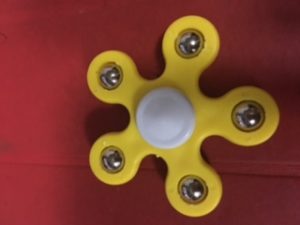
Yesterday I was given my very own fidget spinner and I am SO enjoying it!

So far I have “spun” before breakfast, through breakfast and while organising tasks, generating ideas for a creative writing program and now while writing this and it’s only 10:30am.

I love it. It seems to help me focus and feel less stressed.

Researchers are running around telling us how wrong they are for children, how right they are etc.

It’s not a big deal!

Crazes have always been with us. Marbles, dinky toys, slinkies, hula hoops, conkers, clackers, knuckle bones trolls slime  football cards, Rubik’s cubes, Transformers , slap bracelets, Tamagotchis,  Pokemon , Yo-Yos …………………….
https://www.vox.com/science-and-health/2017/5/3/15529506/fidget-spinners-trend-science
Wise teachers know what to do- “Your spinners live in here!”  as they produce a special FIDGETS HERE basket!

Then we get on with it- just like our teachers did and their teachers before that.

Maybe or maybe not it is good for ADHD or Autistic kids. Who knows? The next craze will be here soon so we can all obsess about that while the kids just get on with the job of being a kid and having fun and avoiding homework.

We could actually learn a thing or two from the kids.

If you can’t beat them- join em!

During the next fortnight we will be studying the science of fidget spinners and making them- check our Pinterest page for ideas!

https://au.pinterest.com/victoriacarlton/fidget-spinners/

We will use them to revise seconds, circles, revolutions, moon around the Earth etc

Anyway- back to my little idea generator- my spinner!

We DO have a choice

We are  acting like lemmings when it comes to our obsession with social media. We are ignoring our kids!

I am truly frightened about the poor oral vocabularies and poor language patterns of many of the children we see. Simply put- we are not talking to our kids enough and they are suffering!

We have choices and we need to really think about this. Teachers cannot possibly compensate for the way kids are being ignored, unnoticed and made to feel invisible.

I believe every child born is a gift from God and they deserve to be nurtured and cared for- not treated as if they were an annoying interruption to games, texting or face book.

Yes, I do know many of you don’t do this but many do and it’s just not fair to kids.

We are all texting madly and ignoring people we are with and when we ARE with the people we were texting, we text others. What is stopping us from BEING WITH each other?

It has gone beyond a joke and now kids are really suffering. Wake up. Your kids are lonely and they need you to be 100% present.

Many kids are completely addicted to social  media themselves- it is MUCH harder for kids to control this but we CAN!

Watch this and make up your own mind- we CAN turn this around and be there for each other- REALLY.

Watch this video and wake-up!

https://www.youtube.com/watch?v=J1gRRiViOdU


Dusting off a maths jewel: CUISENAIRE

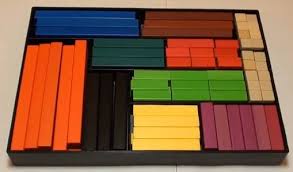
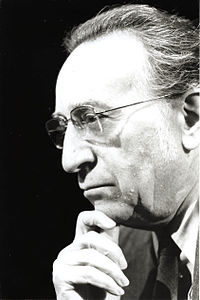
                                                                    Caleb Gattegno invented Cuisenaire rods and they became incredibly popular during the 50s and 60s.

His rods and teaching method truly changed the landscape forever in terms of teacher expectations of children’s maths understanding.

I was fortunate enough to have them introduced to me at an early stage of my career and to have been placed in a school where they were still widely used.
As a rather scared beginning teacher I followed the provided guide book to the letter and used them on a daily basis.
I quickly learned to revise my expectations of what my grade one students could do.
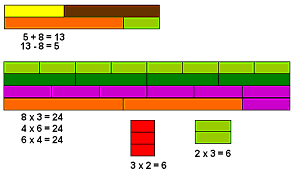
We went WAY beyond the curriculum requirements and my class easily added, subtracted, multiplied and used the division process.
They even learned fractions easily and naturally and set out to use rods to solve simple word problems.

They also used their rods to build structures and make pictures. Children loved them and they all had a set in their desks!

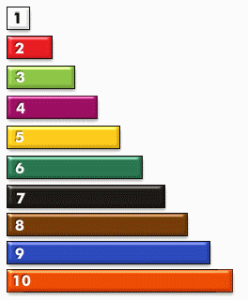
Each colour corresponded to a number and this aided fast retention.

Check out this addition lesson for an example of teaching addition to very young children.

https://www.youtube.com/watch?v=0vbpeKYH3z8

Sadly, the rods gradually went out of fashion and some experts commented that,

“Forever children will see YELLOW and think 5!”

Obviously they had not used Cuisenaire and certainly had not worked with kids! Kids are FAR smarter than that!

Some wise teachers continued using Cuisenaire to an extent and I am pleased to see them becoming popular again!

I now realise they can be used with older kids as well.
Teachers can demonstrate fractions, decimals, percentages with them, teach concepts of money, odd, even, factors and prime numbers and much more!
If they become widely adopted they will again show teachers how easy it is to teach kids to think mathematically and to develop fast recall and mastery of all major concepts.

Kids are much smarter than we think!

Of course they are but one resource in an ever-widening plethora of methods but it is one we can depend on to deliver results!

We have made them an integral part of our MAKING MATHS MEANINGFUL program and I hope to see them used again in all pre-schools and primary schools.

Children love these colourful manipulatives and as teachers and parents we all know what that means-

engaged kids+ great program= RESULTS!


The ABC of Child Whispering: Q is for QUICK

“Hurry. Get that done!”

“Quickly -don’t waste time!”

“Get a move on!”

“Just get it done!”

“No time for that. Move on!”

“Now! I said NOW!”

How often do we say similar words?

No wonder kids are spinning with no ability to stop, focus and slow down enough to try their hardest.

Why the need for this crazy pace?

Does speed add to the quality of life?

I doubt it!

We jerk our kids like puppets on strings and give them no time to play, reflect, think or daydream and them we act surprised when they show symptoms of ADHD! Then of course we often drug them.

Martin Whitely wrote an excellent book about this:

http://speedupsitstill.com/

I watch the new children at my centre work at a very fast pace and throw down their pencils, “Finished Vicky! What do I do next?”

I don’t have to tell them.

The regulars look up and answer patiently, “You daydream. It makes you smarter.” (This comes from a famous story from Einstein.)

We actually have to demonstrate HOW to daydream. Can you believe that? These kids have lost that ability!

Some years ago I told an EQ4KIDZ group of children in Singapore that they had all passed the course and could finish their workbooks at home in their spare time.

One child looked at me in a puzzled manner and asked, “What’s spare time?” He speaks English all the time and understands “spare” and “time” but has never seen or imagined how these concepts could be joined together!

It is NOT OK at keep treating our children in this way. Their lives do not need to be stuffed full of endless activities. They need more of the verb “To be.”

Let’s all put some empty spaces in our schedules this week- for ourselves and for our children.

Our minds, bodies and spirits will thank us.

Check out the link below for more ideas.

https://www.psychologytoday.com/blog/fixing-families/201101/the-frazzled-child-9-reasons-slow-down

What NAPLAN won’t measure


I have a lot of anxious kids at our centre this week.

One young lady told me she had not been to sleep properly for three nights because she was so worried about NAPLAN. We do our best to reassure kids that this is just a snap shot to help schools provide the best possible education but kids know the truth!

They know the letter will arrive.

They know they will be judged.

I watched the children intently yesterday as they chatted, grappled with maths problems and composed sentences and paragraphs. I listened to these children as they read their written maths aloud to help them comprehend the needed processes.

I watched a young man write a cohesive essay about the Stolen Generation and a year one child concentrate valiantly as she tried to get her letters to “bump up” against each other!

I was in awe as students compared a written text versus a filmed version of a fable. They were easily able to do this- even though there were quite young children in our class.

Our students continually inspire me. Sure- some of them have spelling and reading issues and quite a few seem to have an aversion to maths BUT there are so many elements involved in education and the important ones simply cannot be captured by NAPLAN.

e.g.

Kindness: the children showed great patience as a student attempted over and over to interrupt the teaching to avoid the inevitable writing that would follow! They certainly showed a much greater degree of patience than I did!

Creativity: One young student thought a writing task I had set was a little boring so his answer was all in rhyme- all six sentences!

Confidence: after telling a child that the way she had spelled a word was not the usual way, she looked at me in a kindly way, “Vicky this is the way I spell it!”

Persistence: One of our students came to us totally illiterate and yet yesterday could write 1.5 pages about herself and possible career paths within 5 minutes!

The children’s intelligence, persistence, creativity, resilience and confidence and kindness will never be measured in national testing and yet surely these are the most important qualities of all?