Begotten not Forgotten

sacredWe visited a very traditional Church this morning and I became aware of the soothing nature of the old words and prayers. Words like “begotten” jumped out and touched all sorts of emotions and memories. I listened to the beautiful organ as it was expertly played and the tones plus the words of the hymns (some written centuries ago) and wondered. What is it about liturgy, ritual and tradition that we love? The gleaming brasses and lovely altar rails were like a quiet reminder of something more peaceful and whole than the frantic scramble of my preceding weekday existence!

As we knelt to receive Holy Communion it felt as if the whole place was light and full of love and we were connected with centuries of people before us and those to come. Maybe I was just in a particularly receptive mood but the message for me was clear.

Human beings need rituals and traditions. They heal and comfort us and lend some pattern and routine to our often crazy days. The words from sacred texts seem to have a power like no other and I experience this also when visiting other sacred places of worship.

I often visit our local Buddhist temple and experience profound peace when there and when working in Singapore we love to meditate in the Sri Vinaygar temple or listen to the call to prayer in Arab St (a sound that always resonates right through me and makes me want to fall on my knees.)

Children have such an innocent and naïve approach to spirituality. They love to visit holy places and have a deep understanding and simple faith often denied to us. And yet, in this secular world all too many parents deny their children any of these sacred visits and experiences. Children yearn for the “other” and they respond so deeply when allowed to engage with symbols and their deeper natures.

As we have children of every religious persuasion at our centres (including many free thinkers), we honour ALL the festivals by telling children about them! They love to hear about Lent, Ramadam, Purim etc and we feel it helps them to appreciate the richness of our very mixed cultural identities. We acknowledge the Aboriginal traditional owners of the land at all our sessions and indeed the children are annoyed if we forget to do that!

At all our learning sessions we have a time when our groups come together for our motto, ICE song, turning on of the STAR of learning and giving out of awards. The lights are lowered and we have fairy lights to make this time special. Children often tell special news and we might have a few quiet moments or listen to a visualisation before writing. If EVER we get very busy and this GATHERING time is late. the students complain. They hunger for the special, comforting rituals that help them to feel they belong and matter. It is a special, magical interlude and I am sure it contributes to our high academic success rare. Our teachers so often comment that the work output seems to double after the gathering!

So, let’s listen deeply to our needs and those of our children and establish times when they can interact with the sacred and feel the deep connections that bind us all. Acknowledge special days with simple rituals. Establish a gratitude time with your family at meal times where each person holds a special “gratitude stone” and shares one thing for which they are thankful that day.

Mark the changing seasons with a simple nature tray on your kitchen table and above all take the time with your families for quiet contemplation- whether that be in Church, Temple, Mosque or simply in a forest or at the beach.

This spiritual yearning is part of the human experienced and we all need the deep healing and comfort that comes from contact with the sacred.

ADHD BY MOBILE

MOBILEAfter a particularly difficult day with the usual strains and stresses of holding rather a lot of balls up in the air, I need to vent about mobile phones!

Come into my life with me…….

Last week I was trying to give some money to a large boutique. “Do you have a smaller size?” I ask a bored shop assistant texting on her mobile. “No”, she comments without looking up!

Next stop a taxi to the airport. Three times we nearly have an accident because the driver is texting, calling friends and taking business calls. (Yes -business! He is running another business while working and receiving money from this one!)

I fly (thankfully the pilot appears to have been able to concentrate) and safely reach my destination!

Another phone obsessed driver takes me to the hotel where the receptionist asks me to wait while she finishes her text! As a business owner I start to wonder how much this is all costing us? I have a strict rule about NO TEXTING OR MOBILE CALLS at work and wonder if this needs to be written on the wall of every business and organisation!

Later I notice what appears to be an angry rash on my chest and go to the local doctor and his mobile rings while examining me. Wait for this because you won’t believe me but 100% true – he says, “Just hang on a moment while I finish here and I’ll be with you”, puts his phone down and continues to examine my chest and tell me what he thinks. I feel like I am now truly in mobile lala land and walk out and back to my hotel. The doctor’s receptionist rings and tells me I forgot to pay. I cannot write down the words I replied but I’m guessing you can predict!

The next day I give a seminar to 40 teachers and as usual ask them to turn off mobiles so they can concentrate and also not to video. However, I note 14 people texting during the day (you are right- by this stage I have become an obsessional noter of mobile faux pas) and one guy actually quietly videoing me. At the end I politely take him aside and ask him to delete it and twice during my chat he has to take out his vibrating phone and check text messages!

What is really happening here? Let’s not kid ourselves! We are developing a mass form of ADHD that  is costing huge amounts to organisations and businesses in terms of lost focus, poor concentration, less real engagement with tasks, less productivity, poor social skills and massive customer dissatisfaction.

We teach children at my education centre and we teach them to focus, give of their best and improve concentration skills. I just hope their parents can get off their phones long enough so they can notice how much children want to engage and actually be present to their experiences and each other. So many times during this summer I have observed excited children at theme parks, beaches and cafes trying to talk to each other and parents only to be “shushed” because Mummy or Daddy (or both!) are on their phones. I want to push my cappuccino aside, lean over and exclaim, “”Who cares? Your children are here NOW -BE PRESENT TO THEM WHILE YOU CAN!”

Yesterday I designed a theme wall about surfing with a mixed age of children (6-11). In 35 minutes they designed the art work, worked out the labels and helped me take photograph and plan the writing and learning activities associated with this theme. They worked out mathematics concepts associated with surfing, argued, made decisions and even told me what I needed to finish before I could leave! How did they do all this in 35 minutes? Simple- they stuck to their plans and had no interruptions. In fact when their parents arrived to pick them up they were so absorbed they had no idea it was time to go and were reluctant to leave!

The answer is really not hard. TURN MOBILES OFF AT WORK. Be fair! Be honest! Don’t try to have a social life at work.

If you value your relationships turn them off occasionally so you can be WITH your friends, partner or kids.

I am running staff training tomorrow for my company and I think you can guess what will be at the top of my agenda!


POWERLESS KIDS

Why do we rob kids of power?

If you think back to your childhoods you will remember that one of the biggest frustrations was your lack of power. You were regularly told,” When you are older you can do that! When you are grown-up you can do this”, and so on. So basically as children we had very little power over decisions and choices, BUT and this is a very big BUT- as children growing up we took RISKS. (Often without parental knowledge!) We were able to take risks because we could actually escape from adult eyes occasionally. These risks gave us the chance to succeed, fail, learn, get hurt, learn resilience and generally toughen up and learn about the real world. We found out that some kids didn’t like us (even if we gave them our lunch), some teachers also didn’t like us (often for very good reasons) and that we needed to think, plan carefully (possibly scheming is a better word!) to get what we wanted.

Unfortunately many children now just ask for what they want and BAM the good fairy (parent) grants their wish or gives them the date their wish will come true.

They NEVER get to just hang out with kids. Play-dates are now the order of the day! Children are not allowed to dislike each other and have to settle all disputes by calm, well thought out adult procedures. (Children know much faster ways to settle these things!)

If they don’t do homework, teachers are told by parents (too stressful to make children tell the truth), “Aunt Beth unexpectedly came to dinner, he was ill and had to go to bed early, we ran out of time, it was too hard and so on. So what does the child learn?

1. I cannot settle my own problems- Mum must speak for me.

2. It is OK to lie and not be responsible for my own actions (or lack of!)

What are we REALLY protecting our children from? I can hear you all right now bleating on about stranger danger, harsh teachers, tired children ………..

Do you know that children who are over-protected are more likely to be bullied?

However, the fact is you are actually protecting them from the chance to learn, gain resilience, grow up, take risks, develop self confidence and above all have a healthy sense of I CAN and self-esteem.

I am not arguing for children to be allowed to do what they want. It goes without saying that children should be cared for, nurtured and given safe environments. Just remember to occasionally turn a blind eye and allow them to have a voice. We want our children to grow into honest, creative, thinking individuals with strong self-esteem and highly developed sense of self-discipline and responsibility.

Give them some power back! Get some other interests- your children are not your hobby, your handbag or bright, shining possessions. They are  unique gifts to the world and must be allowed a little air and freedom to breathe and learn!

BEAT THE HOLIDAY BRAIN DRAIN

8259758[1]

BEAT THE HOLIDAY BRAIN DRAIN

 Did you know your child’s IQ goes down in January? The old adage, USE IT OR LOSE IT applies to school children over the long JANUARY break.

More than two weeks away from basic spelling, reading, comprehension, maths and just plain mental stimulation will cause their brains to switch off and valuable learning ground will be lost. The long Christmas holidays are often over six weeks and this presents serious difficulties for all children-particularly those who have struggled during the previous year.

Teachers often remark that when children return to school in February, it takes nearly a term to get most children to switch back on to effective learning mode.

Specially trained educators at the International Centre for Excellence, run academic and creative courses throughout January to help ALL children be poised for success in the new school year. Victoria offers these tips for parents who want to ensure their children do not slip behind.

* Get the TV off and restrict the use of digital media to no more than 1 hour a day. There will be howls of complaint but they will be forced to play, read, create, think, go outside and use their imaginations and brains.

  • If possible visit places that stimulate curiosity and provoke thinking skills such as art galleries and museums.
  • Encourage your children to play with friends and neighbourhood kids to develop their social and emotional skills.
  • Establish a family reading time for half an hour each night when EVERYONE reads.
  • Occasionally have a half hour note-passing time where family members who can write must pass notes rather than write- this is great fun!
  • If your child still needs to learn their times tables, make sure this practice happens at least 3 x per week. Ten minutes writing out of tables will give results.
  • Make a creativity box filled with odds and ends such as pencils, markers, paper of all sizes, cardboard tubes, sticky tape and stickers and encourage children to make things. Maybe join them in the process!
  • Eat together around the table and talk. Research indicates that children who talk frequently with their parents are more likely to do well at school!
  • Make up family stories- one person begins e.g. Once upon a time in a dark forest…… and then the next person adds on! These stories do not have to be written down as just making them up will teach children about narrative structure.
  • Get children to help with cooking. Cooking involves reading a recipe, measuring, following sequences and planning and is therefore a very “learning rich” activity!
  • Children love to help with gardening so if you get some cooler days ask them to help weed and tidy up the yard. They particularly love the chance to plan their own small patch of garden, choose plants and look after them and this teaches them about plants and develops their sense of responsibility.


If you follow a few of these tips your child will not suffer BRAIN DRAIN and will be ready to confidently commence the new school year!


TODAY LET’S PLAY WITH ART!

41835873[1]I LOVE watching children create! This week we have many creative holiday courses at ICE and I am fascinated by the way all kids can comprehend more and write fluently if they are encouraged to use art as a tool to help them learn! Whenever we have these days they are messy, unpredictable, enjoyable but above all filled with learning – and lots of it!

I have never met an uncreative child or an uncreative adult. Art is a wonderful tool for all families and individuals to use to unlock the creative process, improve learning and build self understanding!

Here are a few ideas to get you started- both kids and adults!

* Stop criticising yourself or your child as you draw or create- just enjoy the process!

* Keep a CREATIVITY BOX handy – fill it with crayons, coloured pencils, markers, stickers, a tin of paints and brushes, different sorts of paper, cardboard toilet rolls, old Christmas and Birthday cards, scissors, sticky tape and so on!

* Turn the TV off regularly and get the CREATIVITY BOX out so it is easily accessible.

* Sketch a much loved garden plant- follow every line of stem and leaf so you intimately KNOW the plant- this is sort of like a slowing down and meditation exercise. We often use this with very “sparky-brained” and “wired” children!

* Occasionally turn a drawing upside down to copy it. It encourages very careful copying and seems to suspend the self- criticism voice. You become more aware of the lines, shapes and the results are often quite pleasing!

* Get to art galleries regularly with your children so they can get to see great models and start to develop art appreciation.

* Buy some great kids’ art books- there are many available to help kids get to know artists and learn new techniques.

* When you read to your child  make sure you spend time discussing the illustrations and the style, techniques, colours that have been used by the illustrator. Picture books so often have more information in the pictures than the text!

* Link NATURALIST and VISUAL SPATIAL intelligences by constructing collages with objects found in the natural world such as bark, sand, leaves, berries etc.

* Use chalk on bricks and drive ways to draw. It is completely non- threatening because it can be washed off.

* Make some play-dough or purchase some plasticine and make the main characters from the book you are sharing with your child. This helps them develop characterisation understanding- very important for the writing genre.

* Paint pictures of the settings of stories you read aloud.

There is no doubt that enjoying art- both for yourself and your child, will lead to deeper learning, increased ability to imagine, wonder and dream and higher intra-personal and visual spatial intelligences!


JANUARY IS PLAYTIME!

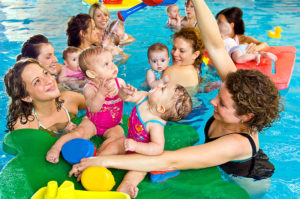
kids in pool

We are in my favourite month- January! Janus is the Roman god of gates and doorways- depicted with a head looking both ways. This of course is highly appropriate and signifies our need to both look ahead and behind at this time. For me it is a month of refection, goal setting, heat, holiday programs with new children, opportunities to catch the breath and above all PLAY! In this 43 degree heat we cannot do too much other than rest, reflect and play!
As I sit outside typing this I can hear the fire engines rushing up Great Eastern Highway to the hills and I am concerned for my friends who live in the beautiful but rather dangerously, dry forest!
Children learn how to live through play and so do we!
“In play a child always behaves beyond his average age, above his daily behaviour. In play it is as though he were a head taller than himself.” Lev Vygotsky
We so often forget the importance of this play for children and I am determined it will be a part of all our programs at ICE this year. We have structured, purposeful learning but delivered in a multisensory,, hands-on and playful way whenever possible and the same goes for our courses for educators and organisations. We ALL learn more when we play!
So- how have you played this week? I have escaped with a great Susan Howatch book and been to the beach and both activities have renewed me and helped me relax and grow.
Why not join me and program in playtime for each week and indulge in some favourite pursuits and even discover a hobby? (What an old-fashioned work that is becoming- sadly!)
And- above all- if you are a parent or teacher- allow time for play and playful learning! You will have happier, better balanced children who learn more and retain what they have learned.
Let’s declare A regular PLAYTIME for all in 2014!

Intelligent Giving

CHRISTMAS GIVING     

At this magical time of year we try to express our love with gifts and children dream of Christmas morning and what it may bring! With a little forethought it is possible to buy toys, games and books that foster the imagination and enhance creativity. Some games will even improve learning skills. The following lists are simply guides that may help you in your choices.

 Remember: while computer games head up most children’s Dear Santa list, they need to be controlled. Research shows us that playing on these toys for over an hour a day will most definitely cause difficulties such as-

  • Lack of communication skills including poor speech skills.
  • Possible neurological dysfunction with fewer connections in the brain.
  • Lack of ability to use the imagination to comprehend when reading and produce ideas for written expression.

 You CAN go across the grain and control TV and electronic toys. The toys and games we suggest have been grouped into the 8 intelligences so you can consider which intelligences need building up and buy appropriate toys.

 Remember that the greatest gift of all is always your time! No toy can replace the fun to be had with Mum and Dad on the floor playing a game or reading a book.

 BACKGROUND TO MULTIPLE INTELLIGENCES

Some revolutionary research in psychology has changed forever the way we assess and judge the intelligence levels of children. Howard Gardner from Harvard University has discovered that we all have many types of intelligence. 

We used to only measure mathematical/logical and word intelligences. We now consider all the intelligences we have and determine children’s strengths and weaknesses in all areas so we can build on the strengths, work to improve weaknesses and help all children to achieve their full potentials. Understanding and assessing children’s intelligences assists teachers to plan their teaching programmes and choose effective teaching methods.  

We now know that intelligence is not fixed at birth and that careful nurturing of each intelligence can lead to higher levels of academic, social and cultural achievements.

These intelligences are: BODY, WORD, LOGIC AND MATHS, SPACE AND VISION, MUSICAL, SELF and PEOPLE, and NATURALIST. 

TIPS AND TOYS TO DEVELOP THE 8 INTELLIGENCES

WORD INTELLIGENCE
  • Read to your child and listen to them read.
  • Play word games and encourage them to do crosswords.
  • Encourage them to write stories, keep a journal, and write letters to friends and relatives.
  • Write notes to your child and leave in their lunchboxes or on their bed.
  • Encourage them to talk about their opinions and feelings.
  • Buy them jokes and riddle books.
  • Provide a good dictionary and thesaurus.
  • Buy books of word searches to improve visual discrimination, spelling and vocabulary.

    PRESENT BUYING

  • Books-fiction, non-fiction, poetry, books on CDs, picture books, short novels.
  • Spelling games
  • Word games
  • Reading Rods
  • Phonics computer games such as JOLLY PHONICS CD Rom
  • Alphabet Zoo and music CD for 2-5 year olds.
  • Games involving general knowledge


    LOGIC AND MATHS INTELLIGENCE

  • Play board and card games that involve number and logic.
  • Provide brainteasers and number puzzles.
  • Encourage children to ask questions.
  • Computer strategy games.
  • Encourage children to classify their belongings and keep in an orderly way.
  • Visit museums, planetariums, SciTech.
  • Follow directions e.g. cooking, making models from patterns.
  • Help children to become interested in real-life maths e.g. How many litres of petrol do you think it will take to fill the car and how much is it likely to cost?

    PRESENT BUYING

Any games that involve rules.

The new game: Worst Case Scenario looks great for big kids and adults who love to play!

UNO

Computer games that encourage maths or logical thinking.

Smart boxes

Experiments

Chemistry sets

Weather gauges

Lego

Gears and pulley sets

Bead threading

Providing appropriate storage for toys helps to develop this intelligence. Chests, shelves and hammocks for soft toys, can encourage children to pick up after themselves.

 
SPACE AND VISION INTELLIGENCE
  • Encourage children to make things with left over packaging, wrapping paper, old buttons etc. Keep scraps in a special “Making Things” box.
  • Provide clay and play dough.
  • Allow your child to draw and paint and display their efforts.
  • Jigsaws and Junior Pictionary.
  • Take them to art galleries whenever possible.

    PRESENT BUYING

    Pictionary

    Crayons

    Chalkboard

    Whiteboard

    Crafts

    Bead sets

    Books with “mind’s eye” pictures

    Mazes

    “Where’s Wally?” books

    Books that stimulate the imagination

    Jigsaws

    Quality children’s movies

    Maps

    Atlas

 
BODY INTELLIGENCE
  • Provide lots of construction toys and help your child to use them.
  • Encourage your child to keep fit by walking, jogging, swimming or participation in team sports.
  • Encourage participation in some type of dancing or drama.
  • Allow children to pull apart old appliances and toys and put them back together again.
  • Play computer games that need fast reflexes.
  • Throwing and catching balls or Frisbees.

PRESENT GIVING

Flippers

All sizes and shapes of balls-including juggling balls

Jump-rope

Disco games

Pedal cars

Trikes

Surf mats

Swimming pool toys

Bungee jumping pass for older children.

Trip canoeing or rock climbing.

Skates

Construction and art/craft equipment.

Clay, playdough or Beady Dough.

 
MUSIC INTELLIGENCE
  • Encourage children to listen to many types of music.
  • Sing along to songs and encourage family sing-a-longs.
  • Show your children how to make simple musical instruments and encourage them to play along with their favourite music.
  • Buy your children simple percussion instruments and if possible let them learn a musical instrument.
  • Kagan brain development CDs.

PRESENT BUYING

CDs of favourite songs, music from movies.

Karaoke sets

Books of songs

Earphones

I Pods

Personal CD players

Percussion instruments such as drums, xylophones, shakers and triangles.


PEOPLE INTELLIGENCE

  • Buy your child some biographies and encourage them to learn about famous people.
  • Make sure your children have sufficient free time to play with their friends.
  • Let your child join scouts, Brownies or join organised sporting groups.
  • Make sure your child has the opportunities to mix with children of different ages and interests.

PRESENT BUYING

Games that are played in groups.

Puppets

Bats and balls

Visits to theme parks and mini golf.

2 tickets to an event.

Club membership eg.riding/archery.

Books about heroes, heroines, famous people.


SELF-INTELLIGENCE

  • Encourage children to keep a journal for reflection.
  • Talk about your own feelings regularly so that they learn that it is O.K. to do this.
  • Model strong I MESSAGES to help them to become more assertive. E.g. “I feel sad when you call me names and I would like you to stop it.”
  • Drawing self-portraits
  • Making a family tree.
  • Keep records of all your children’s milestones and regularly let them have access to these records and old photos so they can know themselves as well as possible and be aware of their changing lives.
PRESENT BUYING

Soft toys

Journals

Drawing supplies-any art equipment.

Giving the gift of spare time.

Kaleidoscope

Books and CDs of guided visualisations/Star Kids affirmations cards.


NATURALIST INTELLIGENCE

  • Make sure your children get to experience nature as often as possible.
  • Take time to stop and look at plants, insects etc
  • Talk to your children about pollution and ways we can help to save the earth.
  • Establish a nature study table for interesting rocks, plants etc.
PRESENT GIVING
  • FLIPPERS/Goggles and masks/Underwater cameras
  • Books about nature.
  • Science experiments
  • Seeds/Gardening supplies-children LOVE to have their own gardens!
  • Toy Skeletons/Take-apart human bodies.
  • Microscopes
  • Visits to nature reserves.


    Importantly –don’t forget to buy a present for yourself! What would really put a smile on your face and a spring into your step?

         Victoria Carlton, Director INTERNATIONAL CENTRE OF EXCELLENCE

www.ice-au.com

NAPLAN CONCERNS

31211692[1]There are emerging concerns about children’s stress levels during NAPLAN testing and of course this bothers educators and makes us wonder if we really need this type of imposed testing. Any system that uses testing as a major aid to check on levels of attainment is putting out a clear message- we don’t trust our teachers! Is the information generated from NAPLAN really that helpful of would continuous observation and testing at regular intervals provide more helpful data?
If the Government really does not trust teachers to be able to help children reach their potential we need to address this- why this lack of trust?? I cannot imagine this sort of checking and lack of trust existing in other professions.
Personally I feel that the teaching profession has never fully grown up, asserted themselves and taken the lead by refusing to have their daily work habits dictated to by people with less knowledge.
Stress for children is not good but most will recover. The REAL concern factor here is teacher stress and this is being largely ignored. Teachers are deliberately staying quiet and not commenting in the media for fear of their jobs. We conduct a great deal of professional development around Australia with thousands of teachers and I can assure readers they ARE experiencing severe stress. Their time is taken up with administering and marking many practice tests – especially in term one where they get kids ready for this testing. Traditionally this has been the term to thaw out Aussie kids’ brains from the long, hot summer baking and help them become receptive to the knowledge they will receive in the new school year. Naplan years are now practising test papers instead and even “off year Naplan testing” is happening as enterprising companies have devised test papers for children in other grades.
Of course this is educational insanity and takes time away from good teaching. We are likely to drive our education standards down further as we know that quality teaching is the one factor that can make a difference.
We need to honour our teachers, nurture them, show trust and provide the tools they need. A huge number of our attending teachers pay their own fees for our courses and report they have to buy their own JOLLY PHONICS and JOLLY GRAMMAR handbooks. Their salaries are not high- less than most professions and that sends a clear message- you are not worth it!
We can carry on down this destructive and negative pathway and increase teacher and student stress or we can look at truly successful educational models such as the one in Finland and start to trust our teachers, provide higher quality training for them and stop the massive waste of energy, time and money related to NAPLAN testing.

Time to think rationally and tell some truths!

“My hand can’t write- it’s a drawing hand!”

I was working with one of my favourite reluctant writers (7 yrs) yesterday and giving him 10 minutes as a writing slave. This means he gets to dictate his story, I write and then he copies. He watched me write and commented, “My class teacher told me My hand is a drawing hand- not a writing one!” I was a bit stuck for words but eventually replied, “I know you CAN write Daniel. Now copy this right now and show me!”

To my amazement he wrote it fast and all over the place, not even trying so I pulled myself up to my full dragonish height and told him to do it again- slower and properly and of course he could! I pondered this later and to be frank I think the class teacher was trying so hard to affirm his drawing ability (great) but chose the wrong words- Daniel now had his excuse and he will churn that out as long as it works. Unfortunately (or fortunately) he now realises it won’t work with teachers at ICE so he is back to the EXCUSES drawing board!

The whole lesson and point of this is- we have to be careful not to feed these STAR (students at risk) kids excuses. They stuff themselves with them like other kids do with hot chips! Most kids CAN write and most CAN read. We need to raise the bar- not lower it. At the moment we have many children with very high intelligence levels but very low self-esteem in relation to their literacy. Sure- some kids do struggle with literacy skills and need specific help. The point is- we must give it to them and change their perception of themselves. Using labels and telling children they will always struggle is putting a self-fulfilling prophecy in their heads.

We give the students many short, timed writing exercises that access and foster their imaginations and if they have not been given too much negative feedback, the recovery process is fast.

We will make a free visualisation available on our website www.ice-au.com and change it regularly. Parents and teachers can also download individual visualisations (fee applies) or even ask for individualised ones to be written. This approach works. Our new book MIND JOURNEYS contains over 200 pages of visualisations, activity pages and instructions and tips to get ALL kids writing. This book will be released soon- email me for advance info- victoriacarlton@iinet.net.au

Let’s go forward confidently- when we write we explore our minds and refine our thinking skills. ALL kids need this civilising skill!

DSCN3520

ALL YOU NEED IS LOVE!

Well-today was all about love for me and what a day it was!

The Beatles were not wrong- it IS all you need and if you love a few people and a few people love you, you are truly blessed.

I had my usual long Monday list of THINGS THAT MUST BE DONE and love intervened in many ways- a bit like a hungry, determined cat that will NOT leave you alone until you stop and feed it!

There were family members fed up with me, family members I was fed up with, people who needed my love more than I had realised and the pain and joy of dealing with it all. And, funnily enough, at the end of a day that still has 90% of tasks undone, it feels like the most satisfying, love filled, frustrating and yet worthwhile day ever. Indeed, a day to remind me to keep the main thing the main thing!

I’ve been reviewing our programs lately and reflecting on why kids do so well on only once or twice a week attendance and I am convinced it is also about  love. The small staff at ICE LOVE their kids and I delight in the cheerful giggles, happy noises and smiling faces I see every day. Looks like in education we also need to keep the main thing the main thing. The Beatles were onto something-love transforms, heals and brings us closer. It is just as necessary in education as it is in our personal lives!

error

Enjoy this blog? Please spread the word :)