Confused schoolboy looking at arrows pointed in different directions, back view,
We are now in January – the time of heat, fires and wonderful freedom for children.
I am fascinated by the amount of progress our students make during the holidays. They come in fresh, motivated and happy.
They are not juggling too many balls at the moment.
They can concentrate.
Many children we see at ICE are enrolled in 5/6 different after school activities and have NO time to play, dream, think or even get their homework done.
Why so many balls in the air?
Is it because we think our kids will be happier if they have all the so-called “advantages”?
Is it because we are frightened of children who might have some spare time? Are we frightened of our own children?
Children are so over-scheduled that when they finish a task at ICE they put their pencil down and quickly yell out, “Finished!” They are desperate for the next task- they do not know how to deal with the spaces between things.
Problem is- it is in the spaces that human beings get their best ideas and insights. Our poor overloaded kids have no spaces, too many balls in the air and unthinkingly grab a digital device to fill any spaces.
Are we all terrified of being with ourselves?
Many children are dropping balls and falling apart. They can’t juggle forever- they need time to be kids!
On behalf of the children we see- I urge you all to allow some spaces- for your children and yourself!
anonymous man with blank face against dark background
I am having a week steeped and stewed in STUPIDITY!
Here are 2 examples-
Who are these faceless people called THEY?
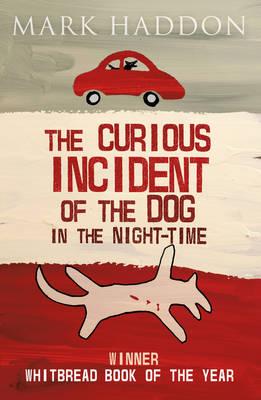
My wise -man book shop owner popped in this week and we had a long conversation about a book he had given me to read- a very thought provoking book called The Curious Incident of the Dog in the Night-time.
We were having a lively conversation about the nature of autism and one of my teachers commented that, “They have recently announced that even 2 year old tantrums might be a sign of autism,” and the inimitable Don exploded, “Who are these &^%$# people called THEY? They seem to be running the world!”
Actually he is right.
How often do we say, “They say………
We need to start thinking for ourselves.
If 2 year old tantrums are caused by autism we have an almost 100% autistic population so perhaps autism is the new norm. What stupidity!
Another stupid example:
I am currently conducting many assessments of new children and most are high achievers who somehow do not fit weird, preconceived ridiculous notions of what children should be able to do.
One grade one child demonstrated an aptitude for maths, great problem solving, understanding of place value and ability to already handle many grade 2 concepts. He is apparently getting an F in mathematics.
How hard does a child have to work to get a decent mark?
How depressing is this for children and parents?
I am ok with an honest reporting system.
I am not OK with trying to put a label on every child and shove a defined mark on a living breathing, improving little human being. Our children cannot be pinned down to letters and numbers.
Very soon we will have a nation full of machine-like children who can only write persuasive texts (as required by our NAPLAN testing), don’t think at all and get Cs for everything!
We would not even treat our pets this way- let alone our children!
Thanks Don- you gave voice to what had been brooding in me for some time. Now I feel better.
Watch out the next person who says something stupid to me! I am likely to throw a whole container of fake snow at you.
Maybe it’s just the season for stupidity ….or maybe I am just too old to agree with these faceless “Theys” any longer!!
Children are natural jigglers and wrigglers. They don’t stay still for a good reason. I am sure I am not the only teacher who has stared at her class and drawn a sharp comparison with a basket of wriggling worms!
They learn by moving, touching, pushing, pulling, moulding, grabbing ……. just watch a group of pre-schoolers at play!
This does not magically stop when they reach a certain age.
Sure their concentration span lengthens but even 10/11 year old need to move.
We are kidding ourselves if we think passive children sitting in desks doing worksheet after worksheet are really learning.
Learning can be interactive, challenging, messy, satisfying, frustrating, joyful ……… all within one lesson! Of course there is a place for worksheets. A well designed worksheet can help children to revise and deepen understanding. But- worksheets will never take the place of a good teacher who can adapt the learning environment very skilfully and often quite quickly to improve learning outcomes.
If we force children to sit quietly for longer than comfortable they will often put all their energy into trying to do just that. For a child that is a bit like us wanting to visit the bathroom BADLY after the seat-belt sign is switched on for landing!
Wise Child Whispering teachers and parents understand this and ensure youngsters have plenty of opportunity to JIGGLE, JUMP, RUN, MOVE – children learn by moving!
Here are some really effective ways to include movement activities in classrooms. We use these regularly as part of Victoria Carlton Programs
Start each day with some movement education- either some Brain Gym or maybe the fantastic Harry Potter Yoga! If you do this you are stimulating their brains and helping some of them deflect some excess energy. https://youtu.be/R-BS87NTV5I2.
Allow your VERY jiggly children a stress ball or similar so they can squeeze and concentrate.
Don’t ask children to concentrate for more than 15 minutes without a stretch, quick exercise, change of activity etc.
Ensure you have plenty of learning strategies drawn from the physical intelligence area of MI so that children can learn while moving!
Try human sums! Children can act like human counters for various operations.
When children sound out words let them jump up and down or bounce a ball at the same time!
Practise word recognition and sentence structure by standing in a line and holding up words and punctuation marks.
Jolly Phonics and Jolly Grammar are incredibly effective ways for children to learn literacy skills and I am convinced that a large part of their effectiveness is due to the huge movement and activity component of the program. Ask us about training opportunities for these courses.
Allow plenty of time for art and craft as it calms children and the amount of learning increases.
(See my FAST ART AND CRAFT ACTIVITIES for ideas https://www.pinterest.com/victoriacarlton/fast-artcraft-activities/
Change the learning environment and displays often so children feel stimulated and enjoy exploring the environment.
Don’t always teach from the front- occasionally teach from the back of the class, have them out of chairs close to you (even big kids!), go into another learning area or even outside. To wake up children’s brains we can’t be TOO predictable!
Choose NOT to notice every wiggle and jiggle. Constantly stopping our teaching for very small lapses of concentration is incredibly annoying to other children and they start to lose the thread of your lesson!
Consider teaching some strategies to let some of the excess physical energy out! (Sort of like opening the steam vents on a cooking pan!)
I teach my chronic wrigglers to curl their toes or fingers and then let them go. This gives a slight movement outlet. They can also tap quietly with feet.
Make daily MINDFULNESS time an integral part of your program. Children sit for a minute in silence, letting go of any worries and just emptying their minds. The quality of the learning after the mindfulness minute is easily observable!
Consider using our visualisations programs: Mind Journeys. We have over 50 of these ready for teachers and parents and provide examples on social media and the whole lot are available in our forthcoming MIND JOURNEYS BOOK. (You can pre-order this now) We have found that using this method to teach creative writing and thinking, has had HUGE benefits for children who normally cannot sit still for more than 5 minutes.
If you would like to know more about your own “jiggling worms,” their cocktails of intelligences and how to increase them, order our ALL KIDS ARE SMART book by emailing victoriacarlton@iinet.net.au or if you are in SE Asia order through www.september21.com.sg
Children are MEANT to jiggle and move so let’s go WITH it in our learning programs rather than putting all our energy into trying to change something that is not actually meant to change! ACTIVE learning and ACTIVE teaching strategies work!
I often joke about how many of our students seem to have holes in their elbows and their wonderful ideas drop out before they hit the page!
I think we forget how hard it is for children to coordinate ideas, handwriting, concentration, punctuation etc and get ideas down.
My favourite lesson every day is WRITING and I am amazed as I see the creative process begin anew with each lesson.
The blank page is transformed- one minute it is empty- the next there are ideas, “wonderings”, creative “splats” and sadly sometimes one word and a pencil that just won’t move!
When I ask children what they would like to write they describe how they have many ideas and just cannot choose. Sometimes they have a HUGE idea and they are frightened to begin because it will take so long to write or they feel they cannot spell the words.
There are so many variables and teachers need a very full tool-box and a huge dose of understanding to be able to effectively teach written expression. We sometimes use story starters- especially when children are tired and we are approaching the end of the year.
As children LOVE random choices, we often cut these up and they take one as a lucky dip. They act as “circuit breakers” so their brains can zoom in on just one idea!
If I give them too many topics to choose from they will get into the “kangaroo caught in the spotlight” syndrome and simply stop!
I have given you some of our story starters here and invite you to try them out. We are always devising more and at the moment we are working on a new Christmas set.
We share all our writing strategies in our writing workshop for teachers- ALL KIDS CAN WRITE. Please contact me if you would like to attend the forthcoming ones in Perth, Adelaide, Brisbane or Singapore.
I have had to sit on this subject for 2 days as as it was connected to an incident that left me white hot with rage! All I could do was rant and rave with my colleagues who all agreed privately but pointed out they are often bound to work within this crazy system!
I worked with a perfectly normal 6 year old this week who is just beginning to sound out and recognise some words. He has a lovely sense of humour and is obviously a very active, creative child who will do well at school.
BUT he comes from a classroom where the levels may as well be inscribed on children’s wrists like those in POW camps! His parents were told the sad news- “Only at level 23!”
Up to level 23 in reading? What does this mean? Of course I know there are various prescribed lists of levels suitable for children with books that fit within these lists. Many of these lists are put together by publishers of particular reading schemes and teachers (searching for a sane, easier way of assessing) are grabbing at these levels and giving out comments such as “Oh dear! Your child is only at level 23- he should be at 30.” Who said? What about the fact that he has started his reading journey and now recognises all the single sounds, many digraphs and can sound out simple words?
What about the fact that he loves picture books, comprehends well and has great ideas for writing narratives?
Aren’t they things to celebrate for a 6 year old? But NO!
Because some children can master all their phonics at 5 years we now judge those who take a little longer.
This is utter madness and teachers know this deep down. Evaluation is a complex process and cannot be pinned down to numbers like this.
You have to get to KNOW a child to evaluate them. Not only do you apply baseline testing, you have to observe, figure out their thinking patterns and watch them in action.
When we make these fast judgements we are lowering our standards as educators and behaving like teaching machines.
The results are sad kids with low self-esteem who already hate school at 6! At 6? Crazy!
I know some teachers are pushed to place kids against very questionable ranking scores but this causes unbelievable harm for children and parents.
We can do much better than this!
Now when I assess children and ask them how they think they are doing at school, they answer me like this, “Oh Vicky- I am only at level 15.” When I ask them what that means they haven’t a clue and neither have I.
Let’s get back to solid, on the floor observation, talking to children, identifying learning styles, finding what they can do, running records and closely monitoring phonological awareness, word identification and fluency. I tell kids when they have problems and I make up plans to help them rather than giving out some meaningless score! We are teaching children- not machines!
What is happening is stupidity of the first degree and I cannot stand back and watch what is happening with a closed mouth.
Come on educators- speak your minds and parents- DEMAND to know exactly what these levels mean and why your child should have to be a carbon copy of some “idealised” robot child!
“ALL THINGS ARE POSSIBLE- ONLY BELIEVE!”
I remember singing this at Church many years ago and wondering, “Could this be true?”
Fortunately for me I was able to navigate my way around the school system at the time and it suited my learning style.
I knew many kids my age who did not do well academically but could think far more creatively than me and were obviously much smarter!
Why do we consign kids to educational rubbish tips so early?
Why are we so keen to burst bubbles of possibilities?
I hear so many instances where teachers have said of a 7 year old, “Well he won’t get to Uni but…….
How would they know?
I have been teaching for a very long time and I can’t predict that.
I truly believe all kids are gifted and that is why I wrote ALL KIDS ARE SMART.
This is what I believe-
We should stop limiting children at such early ages. We don’t use the word IMPOSSIBLE in my programs. IMPOSSIBLE things may well be possible tomorrow!
I see so many anxious parents of perfectly normal, intelligent children who just happen to be taking a little longer to develop.
I also see children who have genuine difficulties as their learning style is not catered for by their school and they have some huge learning gaps. We work hard to mend their self-esteem and establish basic concepts.
We also have many children attending who achieve academically 1-3 years ahead of the expected levels and we provide challenge and enriching programs for them.
Both teachers and parents need to get to know children and considered preferred intelligences and learning style.
Readers of ALL KIDS ARE SMART can use the provided tests to determine their own strengths and weaknesses as well as the children they are concerned with. This helps us to offer precision teaching based on actual needs and delivered in such a way they can access and benefit.
The old hymn was right and is being proven by entrepreneurs all over the world. Most famous entrepreneurs such as Richard Branston scooted around the school system and pretty well ignored it! They refused to have their self-belief and creativity confined and battered as discussed by Ken Robinson:
Child whisperers – take note and stoke the fires of belief rather than pouring the cold, cruel waters of cynicism onto children’s emerging self-beliefs!
If you would like a copy of ALL KIDS ARE SMART please email victoriacarlton@iinet.net.au
We have just finished another Super Science Saturday and again the message is clear! Children with their innate curiosity LOVE experiments and are never bored with the world around them!
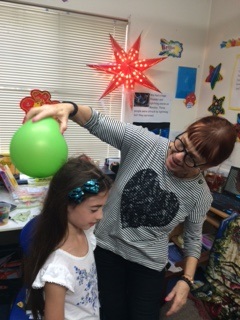
Last week we did an experiment with static electricity, balloons and tissue paper ghosts- they insisted on repeating it again and again!
Later we did an experiment to make candy worms wriggle– it didn’t work well and we had to do it 3 times and try and figure out what variables needed changing. So much thinking and learning!
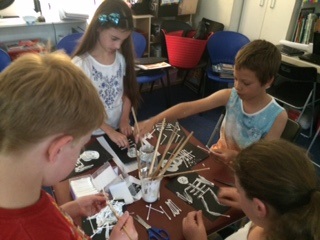
We also learned about our bones by using cotton buds to make skeletons!
Because the learning activities (literacy and numeracy), are peppered amongst the science experiments the children hardly notice they are actually working really hard!
I notice children often turn up 30 minutes early- a clear sign they are enjoying themselves! Many children elect to do a double session- another clear sign they LOVE science enough to give up their precious Saturday mornings!
I often have this sense of excitement Friday mornings because frankly I NEVER know exactly what the outcome of Super Science Saturday will be– I just know that science is most definitely the fastest path to get most kids to feel invigorated about learning and make fast progress!
This Saturday we have a full morning of Halloween experiments, horrible creative writing exercises, ghastly art/craft and nasty maths! I can’t wait!
I was running JOLLY GRAMMAR training over the last 2 days and honoured to have very passionate dedicated Darwin teachers attending!
We were discussing expected levels children reach and ways to measure these levels. I was telling them about what I have done this term at our centre. Basically I took a deep breath and told ALL the children I expected them to jump up a level and reach for the stars this term! The amazing thing is the kids caught “the ball” and they are already running with it. Kids love challenges!
A young teacher (an acting Principal) told us she had doubled the levels her children were expected to reach. She told us she had come from a school in another state where the expected levels were exactly DOUBLE of the ones expected at her present school. So she looked around, thought, “these kids are just as capable” and set new levels. And- guess what? The kids got there! She has doubled the expected academic outcomes in her school by simply believing in her pupils and setting the bar at a higher level.
I was SO impressed. There are many stories about how expectations determine educational standards and we all know it is true but somehow we still accept less than kids can give. This insults children and I truly believe we need to insist on excellence.
I don’t believe, “Do it again,” is a soul destroying statement. Often it means we know they are capable of better work. I am not a fan of putting too much pressure on children but I do believe that we should ALL give of our best. Accepting less than their best is actually quite insulting for children. They WANT to go for gold. They are just not sure of the route and might need to be adjusted in their tracks!
Today I told teachers in Darwin about a teacher I knew who had her Kindy kids writing and drawing pictures to an imaginary fairy who lived in her cupboard. One of the teachers in the workshop told me a lovely story.
This teacher had written on a piece of pink paper with a few squiggles with lots of glitter and asked her 4 year olds, “Can anyone speak “Fairy” around here?
One little boy confidently called out, “I can!” and then made up a lovely, creative explanation of the weird squiggles!
A few weeks later, the teacher thought she would try it again, and asked the little boy to try to decode some more “Fairy” words on a purple piece of paper. This time she wrote a few simple words that could be sounded out. The little boy was having none of this! He was not interested in sounding out words as this was not half as interesting as making up his own story!
The little boy took a good look, and assertively replied, “Sorry, I can’t read “Fairy” when it is written on purple paper!”
The point here is the marvellous confidence and creativity the little boy showed and his ability to fight his way out of a difficult situation!
Young children have huge dollops of wonderful creativity and imagination. Unfortunately we usually squash this within the first 2 years of school. As Sir Ken Robinson points out- so many Kindy kids are creative geniuses but lose it within a year! We need to grow creativity rather than kill it!
Can you imagine walking into your local pub/café/ workplace and asking the same question: “Does anyone around here speak “Fairy?”
I dare you to try! The answers might be a little different!
Immediacy is craved by youngsters but as teachers and parents we need to be aware of the effects on developing characters if we always provide instant gratification to children. We ALL need to learn to wait! (Not an easy concept for children brought up in the age of push a button and something exciting happens!)
Today I came across an interesting article about the famous marshmallow test), done with children that showed that the ability to delay gratification has such a huge effect on our lives. (Stanford University during the 60s)
The interesting part for child whisperers is that a second experiment set up at Rochester University to replicate this but with an important twist, proved that we can deliberately set out to develop this ability to delay gratification in children.
Before offering the child the marshmallow, the researchers split the children into two groups.
“The first group was exposed to a series of unreliable experiences. For example, the researcher gave the child a small box of crayons and promised to bring a bigger one, but never did. Then the researcher gave the child a small sticker and promised to bring a better selection of stickers, but never did.
Meanwhile, the second group had very reliable experiences. They were promised better crayons and got them. They were told about the better stickers and then they received them.
You can imagine the impact these experiences had on the marshmallow test. The children in the unreliable group had no reason to trust that the researchers would bring a second marshmallow and thus they didn’t wait very long to eat the first one.
Meanwhile, the children in the second group were training their brains to see delayed gratification as a positive. Every time the researcher made a promise and then delivered on it, the child’s brain registered two things: 1) waiting for gratification is worth it and 2) I have the capability to wait. As a result, the second group waited an average of four times longer than the first group.
In other words, the child’s ability to delay gratification and display self-control was not a predetermined trait, but rather was impacted by the experiences and environment that surrounded them. In fact, the effects of the environment were almost instantaneous. Just a few minutes of reliable or unreliable experiences were enough to push the actions of each child in one direction or another.”
So what can we learn from this?
Very simple.
We can learn to clean up our act- especially as teachers and BE CONSISTENT with the environment we set up for learning. We can learn that rewards, when consistently and fairly used WORK!
Just this week I had a child show us this. This child is extremely bright but was not showing this at school. He has developed the trait of not paying attention (he is 6) as he is bored and has learned that his ability is a nuisance in his class so he has just switched off. Not a stupid way of coping when you consider he has to spend from 9-3, 5 days a week in this environment! His parents have enrolled him for 2 learning sessions with us per week to try to turn this situation around.
We set out to capture this child’s heart and I listened as the teachers at my center openly acknowledged his great skill with maths (he can work at a level 2 years above his age) and I noticed this little smile growing on his face. During his two 1.5 hr group learning sessions this week I tried to consistently acknowledge him and thank him for his efforts: wonderful mind-mapping, writing, maths and so on. After the second session he bounced out the door – happy, proud of his achievements and back in the learning community! Simple verbal praise delivered on a consistent basis with accompanying points is turning this child around and helping him realise his amazing intellect is a gift not a nuisance. Not rocket-science!
As parents and teachers we can set out today to notice what children CAN do, help them improve and set up goals with them with simple rewards built in.
We award points during each session and children use these to fill in the squares on their rocket ships. (100 squares.) When they have filled in 100 squares they get to choose a prize. It helps that we keep the prize box filled and children notice the wonderful contents as they fill in their scores each week!
They learn to WAIT for rewards and WORK for them!
During each learning session children can earn points for paying attention, getting homework done, neat written work, kind acts, having imaginative ideas………. They LOVE their points system and it works. Consistency of approach is ALWAYS the key. I figure that if we can just turn one young life around a week so they can enjoy learning and develop their potential, the effort and grey hairs will be worth it! Teaching and parenting truly are the most important jobs in the world!







![Teacher-Stickers[1]](https://phonics.raisingpath.com/wp-content/uploads/2015/06/Teacher-Stickers1.jpg)


