The ABC of Child Whispering – N is for NO!

The ABC of Child Whispering

N IS FOR NO    NO

Why are parents and teachers so scared of saying, “NO!”?

When researching material for this post I came across many articles about creative ways to say “No.”

Save your energy for something really creative!

Just say, “NO,” and mean it! It’s not rocket science and your child will not develop a phobia or some deep psychological problem from this word.

I said it at least 10 x over a 2 hour very successful, happy teaching session this morning. Each time I said it the kids involved either-

a. just stopped what they were doing/asking for

or

b. repeated the inappropriate behaviour or asked again (the more persistent ones!) I simply said, “No!” again and they gave in.

Kids like to push the boundaries and some will push further and more determinedly. That’s fine- shows strength of character. Still say, NO!”

If your child is doing something inappropriate or asking for something you don’t want to give simply say it.

They will thank you one day.

If you don’t discipline your child, the world will- and in a much harsher, unkind way!

NO is not a loaded word- just a word that conveys a clear meaning. You can’t do that and I mean it!

Have a look at this fantastic article and maybe stop continually justifying your NO!

http://www.huffingtonpost.com/dana-westreich-hirt/just-say-noto-your-kids_b_5775956.html


They look but never see!

I have just returned from a trip to the UK for a conference and holiday and have been reflecting on all the wonderful sights, places and people I encountered.

I have plenty of time to think (as severely jet-lagged) so have twice the time for reflection!

I love the National Gallery in London as it houses so many of my favourite paintings and each year I notice how few people really look at paintings.

While in the room with many of Van Gogh’s paintings I just sat and watched people. There was a huge crowd jostling for the best space to click, click, click with their mobile phones and NOBODY looked. NOBODY gazed and tried to take in the incredible beauty, challenging messages, colours, juxtapositions of objects and sky and strange unsettling images.

Sadly they just wanted to have these little rectangular pictures on their phones to show and prove they had been there.

Why?

Don’t people want to SEE anymore?

Is it really too hard to interact and to have to think and reflect?

I was with my cousin, his partner and young daughters (4 and 5 years) and witnessed completely different reactions from the kids.

Their parents encouraged them to stand and stare at a couple of the pictures and then to try to draw them. The kids were SO engrossed and spent around 45 minutes at their drawings. They SAW far more than these people who were “doing the National Gallery.”

I want the kids I IMG_3250teach to SEE and to BE and to not fall into the trap of interacting with their environments in such  shallow ways. To do that I have to plan learning activities where they can really THINK, REFLECT and INTERACT with learning materials.

When children are rushed they are troubled and the world is already so full of troubled people living lives at headlong speeds. Taking time, reflecting and really SEEING can be healing opportunities where we grow, find out who we are and dwell in the deep end for a while!

ELVES, WISHES, HOT CHIPS AND SPELLING!


elf


ELVES, WISHES AND SPELLING!

On Saturday we commenced our WINTER FESTIVAL.

I told the kids the old solstice legend of people hanging their wishes from trees for the elves to see and hopefully grant! The kids were keen to do the same so we hung our wishes on our learning tree.

I also told them that elves HATE spelling mistakes and don’t read wishes that are misspelled! What a change- they all checked their spelling carefully, checked in with teachers and used dictionaries. I have a feeling these spelling elves are here to stay at ICE!FullSizeRender (002)

I was fascinated to note their wishes. Many asked for gifts for their families. One child wished for immortality. A few asked for happiness and peace.

I truly believe rituals and celebrations are very important for children. They love the “wheel of the year,” and are fascinated by old traditions. They help children feel grounded, part of the community to understand their connections to the past.

This week and next we are celebrating this MIDWINTER time with a veritable festival of learning activities. We have even obtained a fake log fire to add to the atmosphere!fire

Here are some of our activities- they can easily be adapted for any classroom and are great to use at home!

  • Studying and writing about ice crystals http://encyclopedia.kids.net.au/page/ic/Ice_crystals
  • Mindfulness sessions- staring into a candle or fire and sharing what came into your mind.
  • Cook and eating wintery food such as baked potatoes, apple bread or hot chips.chips
  • Expressing gratitude for all the wonderful blessings we have experienced this year and setting goals for the warmer months ahead. You could light a tiny tea-light for each blessing children tell. (Keep up high!)
  • Reading and writing about the Earth’s orbit around the sun and why we have seasons.
  • You tube cold weather clips of crackling fires and snowy scenes. https://youtu.be/25SV6zqTl1k

https://youtu.be/zGD5C4wLsrs

So put plenty of layers on, make huge hot chocolates and celebrate this lovely deep, introspective season. It offers opportunities to go deep, get introspective, re-adjust the sails and just take a much needed deep breath!


Treating kids like rubbish!

“Your son is absolutelycrumpled paper no good at anything!”

I was chatting to one our Mums this evening and she told me of a very sad incident. It concerned her young son and his classroom teacher.

The classroom teacher told the mother, “Your child is absolutely no good at anything. He is not good at reading, writing, maths, art or even physical education.”

The mother gave the best answer possible, “Whatever,” and grabbed a piece of writing paper from the teacher’s desk. She crumpled the paper into a ball and held it up for the teacher to see. “My son is like this crumpled piece of paper. You and this school have completely crushed his spirit and he has folded up deep inside himself.”Then she threw it in the bin and left.

She knows from her mother’s heart and brain that her son has strengths and weaknesses just like any child. She knows that given encouragement and a loving and nurturing learning environment, he will thrive.

This incident took place in a Church school. I think they need to remember the words of Jesus, their leader,

“Then Jesus called for the children and said to the disciples, “Let the children come to me. Don’t stop them! For the Kingdom of God belongs to those who are like these children.”

No wonder this child has no confidence and has given up. At the moment he believes he is useless and it now our job to help him re-build his fractured self-esteem.

How sad that a teacher can behave in this way. Educators are meant to teach and build children up- not crush their beautiful spirits.

Your child won’t amount to much….

AllKids are Smart Front CoverYour child won’t amount to much….

At least 10 times over the last 2 years I have had sad, hurt parents tell me the teacher of their child (primary years) has cast a very negative judgement on their child. Here are a few typical ones:

  • “Will never be academic,” (turned out to be an A student),
  •  “Will not amount to much,” – child picked that up and then pretty much believed it and went on to tell her Mum that the teacher “knows I will never be able to do it!”
  • “Will make a good hairdresser”- yes- that really WAS said! Apologies to all hairdressers as I think you are amazingly gifted!
  • “You need to lower your expectations because he will NEVER go to Uni- just doesn’t have the capacity.”  (That one went on to top his high-school year and will definitely be going to uni!)

How can trained educators do that?

How can we judge human potential so lightly and go on to trample on everyone’s dreams?

Whenever I look at the groups I teach I am always aware that I might have an Einstein, a Richard Branson, Maria Montessori, Marie Curie or a Bill Gates sitting in front of me. They might wriggle around, show little interest and be downright non-compliant at times. So what? Maybe my chosen teaching method that day was boring. Maybe they already knew the material. Maybe they were tired or had a fight with their best friend………

Many very successful adults did very poorly at school and in fact failed!

What does that tell us?

STOP JUDGING!

It could be us as educators or our inflexible exam based system that is breaking the spirit of our children and holding up their potential.

I have met many successful people with terrible memories of school. They were made to feel stupid, inept and eventually angry and resentful. Luckily anger has lots of inherent energy and they used it to fuel their future success.

The interesting thing is that behind all these failures who made good was a parent or mentor who really believed in them.

Just one person to believe in them made the difference!

If not for Einstein’s mother the scientific world would be so much poorer.

My take-away message is two-fold:

  1. To teachers- stop judging potential and treat EVERY child as potentially gifted. Look instead at your teaching methods.
  2. To parents- keep believing. Refuse to swallow the negative, bitter pills given to you. Let your child know you believe in them, provide a positive learning environment and let your child’s mind unfold!

So what if they fail the test, exam or forget the facts? There is a lot more to education than those things.

We believe EVERY child is smart and this is why I wrote a book of the same name.

Refuse to believe anything less.

Contact us on 61 8 92714200 to get a copy of the book. If you are in Singapore you can purchase it from www.september21.com.sg

Email me privately on victoriacarlton@iinet.net.au if you have any matters re your children you would like to discuss.


The ABC of child whispering: M is for the MAGIC OF MOVEMENT

happy jumping child in summer

The ABC of child whispering: M is for the magic of movement.

I was walking our dogs by the river on Sunday, watching them enjoy the sheer joy of just moving- no destination, reason needed. Just the sheer joy of movement was driving them. I was thinking how my gym times are mostly to do with vanity and not just enjoyment and then I realised that wasn’t strictly true.

Lately I get lost in the yoga sessions and I am completely IN it and loving the feeling and movements. The same (amazingly!) is starting to happen in Body Pump and gym workouts. I am losing myself and totally IN my body and it feels good- actually GREAT!

The interesting thing is that all this movement is in fact very good for our brains and this also applies to children. They relish the joy of movement!

I love watching them engage in yoga, Brain Gym or movements from Power Brain kids (by Ilchi Lee.) Even 5 minutes of these movements seem to switch the kids at ICE onto learning and really engage them. Preceded by a short burst of creativity and Followed by 1 minute of mindfulness, we have the perfect formula to begin our sessions.

Our beginning formula is always CMM

CREATIVE/MOVEMENT/MINDFULNESS

Sadly, children often don’t do much physical movement inside classrooms but moving really enhances learning. Qxygen and blood flow to the brain increases, enjoyment and engagement levels rise and children learn more!

“Many early cognitive researchers ignored play, assuming it had nothing to do with intellectual growth. They were dead wrong. Many play-oriented movements have the capacity to improve cognition, including the following:

  • Exercise play (aerobics, running, chasing, dance routines).
  • Rough-and-tumble play (soccer, football, wrestling).
  • Solitary play (doing puzzles, object manipulation).
  • Outdoor learning activities (digging, observing insects).
  • Stand and stretch activities (tai chi, Simon Says).
  • Group or team competitive games and activities (relays, cheerleading).
  • Constructive play (building with blocks, model building).
  • Exploratory play (hide and seek, scavenger hunts, make-believe).
  • Functional play (purposeful play, such as practicing a new skill).
  • Group noncompetitive games (earth ball).
  • Individual competitive games (marbles, track and field, hopscotch).
  • Adventure or confidence play (ropes courses, trust walks).
  • Group noncompetitive activities (dance, drama).
  • Walking excursions (outdoors, indoors).

Play, recess, and physical education are essential for many brain-based (biological) reasons. Here are just some of the benefits of exercise:

  • It allows learners to make mistakes without “lethal” consequences (with far less embarrassment and more fun than in a traditional classroom situation).
  • It enhances learning (Fordyce & Wehner, 1993).
  • It improves the ability to handle stress by “training” the body to recover faster from the quick surges of adrenaline associated with demanding physical activity . . . and classroom environments.
  • It triggers the release of BDNF, brain-derived neurotrophic factor (Kesslak, Patrick, So, Cotman, & Gomez-Pinilla, 1998). This natural substance enhances cognition by boosting the neurons’ ability to communicate with one another.
  • It can enhance social skills, emotional intelligence, and conflict resolution ability.
  • Exercise may increase catecholamines (brain chemicals such as norepinephrine and dopamine), which typically serve to energize and elevate mood (Chaouloff, 1989).”

(Eric Jensen: Teaching with the brain in Mind.)

MOVEMENT in schools is never a waste of time! It will enhance and accelerate learning. We never miss it- if we did we would be missing a vital part of our teaching-learning cycle!


MAD writing procedure

MAD stanjpg_5935_Royalty_Free_Clip_Art_Happy_Pencil_Cartoon_Character_Holding_Golden_Trophy_Cupds for MODELLED AWESOME DAILY writing

We use many visualisations to increase the fluency and speed of children’s writing. This has been a very successful strategy and I have been trying to develop a different but as successful strategy that takes less time when we want to target specific topics, genres or spelling/grammar conventions.

MAD writing is the result and we have now used it with hundreds of children with great results!

The children enjoy it as it is fairly short, targeted and gives them great results.

They love to share their results!

This will not going to replace other forms of writing we do.

It is simply being implemented to increase writing fluency, understanding of sentences, paragraphs, grammar and to improve spelling. New topics are provided each week.

Approximately 20 mins is needed but I have often completed a lesson in 15 mins when short of time!

STEPS:

  1. Write up topic on board.
  2. Briefly discuss and model write YOUR response to this topic. (NOT children’s ideas) 5 mins
  3. Children read your writing aloud. 5 mins
  4. They write their own response  5 mins
  5. Edit and share 5 mins (only 2/3 can share)

Only write 2-4 sentences when you are modelling. Children might write more and they might “borrow” yours. Some children might want to copy yours completely. That is valid as you are a model.

Eventually they will have the confidence to do their own.

 A FEW SAMPLE TOPICS FOR A WEEK

MON- My ideal weekend.

TUES – A terrible experience.

WED – What a surprise!

THURS- My favourite unhealthy food!

FRI- If I ruled the world!

SAT- The world stopped spinning and ………


Here is an example of a lesson where I used the topic MINECRAFT to stimulate children’s writing voices!

https://youtu.be/annKAMzNq1w

Please ask any questions regarding this procedure – victoriacarlton@iinet.net.au and remember we have crafted a very practical one day course for teachers (ALL KIDS CAN WRITE) to demonstrate and explain all our writing strategies and teach you exactly how to apply each one! (Contact us for course details!)


Switching off to switch on with more power!

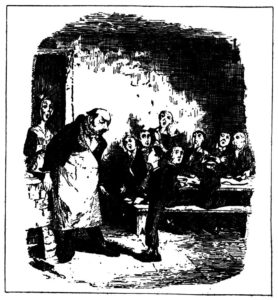
“Please Sir, Can I have some more?” (Oliver Twist)more

I am in a thinking space. A place to reflect.

I’ve only been here 3 days and the magic is already working!

Bali weaves a spell around us all and like Oliver Twist I want more!

I am working over the next 2 days giving JOLLY TRAINING in a school in Sanur and really enjoying the change of pace, beautiful environment, smiles everywhere and warmth.

I’ve had time to think hard about our educational programs and future directions.

Time to just be!

I’m always talking about Gardner’s 8 intelligences and the need to develop the Intra-personal intelligence for children.

But adults need it too. This is the one we so often ignore as we plod on and on and on without ever stopping and asking ourselves important questions such as:

Is there a better way?

Are we missing something important here?

Are we fulfilling our visions? If not- how can we adjust?

Times like this are like flight-plan adjustments!

If I can think, reflect and feel this good within 3 days – then I need it more often!

To really put 100% of our passion and energy into our lives we need this time-out to switch off, and then switch on again but with a brighter light!

The thinking and reflection I have done here will last a year- and then I’ll be back for MORE!

Thanks Bali- 3 weeks next time!

The ABC of Child Whispering: M is for MAGIC and MYSTERY


Cute school boy sitting on floor and using his smartphone

I am getting ready for tomorrow’s NEW-START workshop and thinking of ways to introduce some magic and mystery to the environment.

Last year we ran this workshop in Singapore and Perth and we turned the lights out and had scores of twinkling electric stars and candles when the children came in.Charlotte 2

The room felt like a IMG_3221cosy but mysterious cave and the children were all asked to remove their shoes as they entered. This signalled that we were going to be doing something quite different. We were going to get in touch with our deeper selves and try some transformation- all of us- adults and children!

We try very hard to create an air of mystery and magic at ICE and surprisingly it isn’t expensive or hard. You simply have to view the environment through the eyes of a child and then let your imagination run wild!

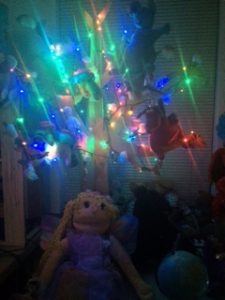
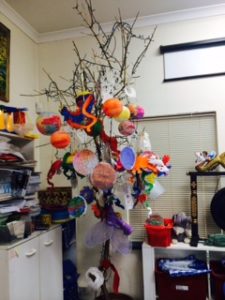
We have a star of learning that is switched on at every session to show how much we value learning and a learning tree complete with coloured lights that is hung with symbols of all the important learning activities we do as we go through the year.star

We always have quiet, relaxing music and some soothing art/craft or books ready for the children when they arrive. I love watching the way they visibly relax as they enter this magical space and start to interact. Children are so ready to enter into their imaginations and learn when given environments such as this.

I have been into so many amazing classrooms this year to train teachers and I have seen some wonderful, inviting environments deliberately crafted by wise, child-whispering teachers who understand the effect these surroundings make for children.IMG_5199

Parents can create a sense of sacred importance when they eat together as a family. Simply dimming the lights and lighting a candle to represent the love of the family, can create a special atmosphere. Children are far more likely to want to talk and communicate deeply in such special spaces.

Giving ourselves a magical interlude calms us and helps us open up to each other. It is no accident that romantic restaurants have candles and dim lights! Let’s also provide those spaces for our children to nurture their wonderful sense of magic and mystery. This is how we grow the imaginations and rich neural connections children need for learning!learning tree

NEW START FOR YOUR CHILDREN

chick and egg

How many times have you wanted to press rewind but you know this is not possible?

Children suffer from this longing as they often blurt things out and then wish they could take them back!

Sadly we can’t do this but we CAN learn from mistakes and re-group and get on track and start our lives again!

I believe we ALL need a re-start sometimes.

Children need to feel optimistic and feel they can get back on track.

We have written a transformational and very effective workshop to help children achieve this.

We call it RE-START  and we have developed specific practical strategies to help children achieve this. We help them develop a sense of gratitude about themselves and what they already have and then we help them to set realistic goals.

We help them develop planning procedures and show them how to view life from the glass half full perspective.

Children are helped to become assertive, determine their strengths and weaknesses and to realise we are ALL smart! (But often in very different ways) All attending children are taken through a process to help them determine their stronger and weaker intelligences so they know how to strengthen their academic strengths by harnessing their strengths and talents!

We harness the image of the chick coming from the egg and show children that we can re-emerge with everything we already know.

Optimism can be taught but needs careful planning and persistence.

Both teachers and parents need to model optimistic behaviours by using positive language and actions. See this link for ideas to achieve this!

http://www.ahaparenting.com/parenting-tools/emotional-intelligence/optimism

There are great benefits to be had (for both children and parents) by adopting more optimistic outlooks. In our experience at ICE, children with positive outlooks are healthier, more resilient and tend to reach higher academic outcomes as they don’t allow negative self-talk to stop them!

http://stress.about.com/od/optimismspirituality/a/optimismbenefit.htm

Martin Seligman, the great expert in this area puts it so well:

“It’s a matter of ABC: When we encounter ADVERSITY, we react by thinking about it. Our thoughts rapidly congeal into BELIEFS. These beliefs may become so habitual we don’t even realize we have them unless we stop to focus on them. And they don’t just sit there idly; they have CONSEQUENCES.”

We believe these skills can be taught at an early age and will benefit children for the rest of their lives. Call us in Perth on 92714200 or email me on victoriacarlton@iinet.net.au for a comprehensive flyer about this course. Our next RE-START course will be held THIS Wed- 20-4-16


error

Enjoy this blog? Please spread the word :)