
SURVIVING NAPLAN

Whether or not you agree with NAPLAN- it is arriving next week!

These tests are given to provide a snapshot of a student’s academic skills and the results help schools determine the effectiveness of their programs and the specific needs of their students.

Some children enjoy tests and many do not.

We have found many of our students are over-concerned and we know that stressed students are more likely to fail. This is the reason teachers and parents need to stay calm and help kids to de-stress.

Simply tell your child you know they will do their best and if they have problems you will help them and so will their school.

Don’t try to second-guess what might be in the test. It is far too late for that!

Now is the time for calm and focused thinking. Your children need good sleeps, minimum screen time and plenty of exercise.

Above all they need your calm attitude and a little fun! Laughter is excellent to lower stress levels and help children to stop worrying. No amount of worrying will help children to get better scores.

On the day of NAPLAN make sure your children eat a nutritious breakfast, get to school on-time and have a healthy packed snack and lunch.

They will probably want to chat to you about the tests after school but if not, just leave it be! They need a little down time to process and it is far better to simply continue with usual daily routines.

When you get the results, please do not stress if they are not what you expected. If your child gets nervous during tests they may make many mistakes and not really show what they can do.

Stay calm and congratulate them on pleasing results and tell children you will make sure they get all the help they need if the results are not good.

Remember-NAPLAN is just one measure of progress. Their teachers are also keeping dated samples of work, test results from class tests and observational records to make up a far more comprehensive picture.

Above all, help children to celebrate all their successes as well as difficulties and to let children know that their mistakes are simply signposts to success!
 

THE HIDDEN CONCERNS OF NAPLAN


There are emerging concerns about children’s high stress levels during NAPLAN testing but the hidden, huge concern is massively increased teacher stress load and this is being largely ignored. Teachers are deliberately staying quiet and not commenting in the media for fear of their jobs.

We conduct a great deal of professional development around Australia with thousands of teachers and I can assure readers they ARE experiencing severe stress. Their time is taken up with administering and marking many practice tests – especially in term one where they get kids ready for this testing. Traditionally this was the term to thaw out Aussie kids’ brains from the long, hot summer baking and help them become receptive to the knowledge they will receive in the new school year.

Naplan years are now practising test papers instead and even “off year Naplan testing” is happening as enterprising companies have devised test papers for children in other grades.

Of course this is educational insanity and takes time away from good teaching. We are likely to drive our education standards down further as we know that quality teaching is the one factor that can make a difference.

Teachers simply cannot do their jobs as so much time is taken up with test preparation.
Any education system that uses testing as a major aid to check on levels of attainment is putting out a clear message- we don’t trust our teachers!
If the Government really does not trust teachers to be able to help children reach their potential we need to address this. Why this lack of trust? Does this lack of trust existing in other professions?
We need to honour our teachers, nurture them, show trust and provide the tools they need. A huge number of our attending teachers pay their own fees for our courses and report they have to buy their own JOLLY PHONICS and JOLLY GRAMMAR handbooks. Their salaries are not high- less than most professions and that sends a clear message- you are not worth it!
We can carry on down this destructive and negative pathway and increase teacher and student stress or we can look at truly successful educational models such as the one in Finland and start to trust our teachers, provide higher quality training for them and stop the massive waste of energy, time and money related to NAPLAN testing.


Teach like a kindergarten teacher


All I really need to know… I learned in kindergarten: Robert Fulghum

“These are the things I learned (in Kindergarten):

1. Share everything.
2. Play fair.
3. Don’t hit people.
4. Put thngs back where you found them.
5. CLEAN UP YOUR OWN MESS.
6. Don’t take things that aren’t yours.
7. Say you’re SORRY when you HURT somebody.
8. Wash your hands before you eat.
9. Flush.
10. Warm cookies and cold milk are good for you.
11. Live a balanced life – learn some and drink some and draw some and paint some and sing and dance and play and work everyday some.
12. Take a nap every afternoon.
13. When you go out into the world, watch out for traffic, hold hands, and stick together.
14. Be aware of wonder. Remember the little seed in the Stryrofoam cup: The roots go down and the plant goes up and nobody really knows how or why, but we are all like that.
15. Goldfish and hamster and white mice and even the little seed in the Styrofoam cup – they all die. So do we.
16. And then remember the Dick-and-Jane books and the first word you learned – the biggest word of all – LOOK.”
Robert Fulghum

Kindy teachers are different!

  • They don’t serve up learning in pre-parcelled lots- they knit it together so that little children make connections and learn deeply.
  • Kindy teachers know that if a child doesn’t understand- then show them in a different way.
  • They know children learn differently- very differently.
  • Kindy teachers are tired- often!
  • They can never say, “Turn to page 35 and do all the questions.”
  • Kindy teachers HAVE to be present.

They HAVE to be well planned and above all they HAVE to love children – a lot. They certainly don’t do it for the money. They are never paid enough to cover what they do!

All of us can learn from watching our immensely creative kindy teacher colleagues. imagine if all teachers taught like kindy teachers- children would be happy, be allowed to develop their strengths and learn in ways that suit their learning styles.

What a radical idea!

They have got it right and we need to study them and learn from them.

Be there. Be present. Love your children. Expect the unexpected and FLOW!

If you teach like a kindy teacher you will probably have premature grey hairs, lots of “crinkles” and have a desperate need for sleep. But be assured- you have more effect on your students than anyone else.

I am sure God has a special place in Heaven for kindy teachers- huge comfy beds, warm scented baths and trashy magazines with wine and very good chocolate!

What you do MATTERS and we admire you greatly!

The ABC of Child Whispering: Q is for QUIET

Kids need to be quiet sometimes and thrive with regular doses of silence.

However, they are often uncomfortable with silence because they don’t experience it. They are very rarely given the chance to be immersed in the profound silences that soothe and heal us.

Parents and teachers can set out to deliberately set up silent or near silent situations for children.

It’s like a re-boot for them (and for us).

Emotions settle, thoughts are gathered and new insights occur.

The spaces between are where intrapersonal intelligence can grow and lead to much deeper learning.

Teachers can-

Have quiet, restful music playing as kids complete work- especially writing.

Allow a few minutes “thinking” time between classes.

Take children through brief mindfulness sessions each day.

Parents can-

Encourage some silent reading time each evening.

Go for a listening walk- no talking allowed!

Regularly take children to wilderness places so they can connect deeply with nature

Family drawing/art time with quiet music.

Encourage children to sit quietly and observe birds, breezes blowing grasses or shapes of clouds.

Silence can heal, deepen learning, center us and leads us back to our true selves.

Silence heals our souls and helps us to join the dots of our disordered and untidy existences.

Try a slice of silence today and feel yourself calm and focus!

Everything that’s created comes out of silence. Your thoughts emerge from the nothingness of silence. Your words come out of this void. Your very essence emerged from emptiness. All creativity requires some stillness. Wayne Dyer


The ABC of Child Whispering P is for PLAY

Cute little girl is blowing a soap bubbles

We all know that children need to play but do we really understand why? Actually it is VITAL that children play and that we don’t over-schedule them so their play times are eroded.

Play

  • develops creativity and imagination
  • improves fine and gross motor skills
  • builds emotional intelligence – especially empathy and resilience skills
  • is important to healthy brain development
  •  helps children to learn about their world and appropriate ways to interact

Play can take many forms and does not always need to be structured.

It is often during solitary play times that children think deeply and examine feelings and solve problems.

Intra-Personal intelligence is strengthened when children have plenty of time to play.

The following link will give you many ideas for ensuring your children are not PLAY DEFICIENT and grow into healthy and well-adjusted young people.

http://raisingchildren.net.au/articles/why_play_is_important.html


The ABC of Child Whispering P is for PAST

Punish Forgive Computer Showing Punishment or Forgiveness

I am often surprised at the way children hang onto old hurts and cannot let go of the past.

One child I worked with in our EQ4KIDZ program had hung onto a past resentment for 4 years! It was actually quite trivial – to me- not to him!)

His mother had forgotten she was taking him to a movie and had made other arrangements. This happened when he was 7 and it was fermenting inside him still at 11 years!

We teach children about the power of forgiveness in week 4 of our EQ4KIDZ course and for many children this is a complete revelation.

I usually come out bending over as if my back has a heavy load and the children ask me, “Vicky! What’s the matter?”

“I am angry with lots of people and I am not going to forgive them! They should pay for what they did. I will never stop being angry with them!”

“What did they do? When did it happen?” they ask.

“Oh- about 10 years ago but they didn’t say sorry so I will NEVER forgive them! I would rather walk around like this for the rest of my life, bearing this huge bag of hurts and resentments on my back!”

Usually one of the kids or a teacher will comment, “Just let it go Vicky. Forgive them and move on!”

“Really?” I ask. “Is it THAT easy?”

So then I say, “OK. I am letting it go,” and stand up straight with a big sigh of relief and often the children spontaneously clap!

We then darken the room and get a huge bowl of water and place it in the middle of the floor- children all sitting around it. We show the children our special “Forgiveness stones”. (We buy them from a local hardware store.)

We play quiet music in the background while we invite the children to come one by one and place a few stones in the bowl of “love” to show they are forgiving someone. Some children take 10 stones, some just 1 or 2. We also tell them they can place stones in the bowl to represent forgiving ourselves and moving on.

It is interesting and powerful to watch how sacramentally the children go through this special forgiveness “ceremony.”

Forgiveness can be modelled by parents who decide to let go of old hurts and resentments and talk to children about this.

Forgiveness is powerful and transformative- both for the forgiver and the forgiven one! Let the past be in the past.

BENEFITS OF TEACHING MULTI-AGE GROUPS

Overhead View Of Four Children Playing On Bed Together

Tomorrow I will be teaching children from 7  to 11 years.

It will be like conducting a symphony of carefully chosen learning experiences. To successfully manage this I need to know the curriculum content and I need to know the needs of the children I will be teaching. it takes careful planning but the benefits are HUGE!

There is considerable evidence supporting multi-age grouping for teaching.

“When compared to children in single age classes, children in multi-age classes are superior in study habits, social interaction, self-motivation, cooperation, and attitudes toward school. Academically, children perform just as well or even better than those in single grade classes. (Gajadharsingh 1991). It will take time and effort, but our kids are worth it!”

www.multiage-education.com/multiagen-b/themulticlass.html

We have followed this approach for many years and see many benefits:

  • Teachers teach children at point of need rather than being confined by perceptions of age
  • Children can get access whatever help and teaching they need in flexible groupings
  • More able children tend to be fully extended.
  • Children with difficulties feel more relaxed about accessing much needed assistance and will ask questions more readily.
  • Essentially this approach is modelled on natural family groupings and honours the fact that we grow and mature at different times, sometimes with “spurts” and sometimes more slowly.
  • Teachers who teach in this way tend to develop the ability to be more flexible and use more learning games and “hands-on” equipment.
  • Of course teachers who are new to teaching in these environments need some coaching and modelling in this teaching method. It is like conducting an orchestra and once you know how, you just get better!
  • We believe the educational gains are great so if you have the chance to teach in a multi-age environment, take it! You have much to gain!

Parents who have the chance to enrol children in multi-age classrooms or tuition centres – know your children are experiencing an excellent education mode and likely to have very tangible social and academic gains.

OVER TESTING LEADS TO UNDER TEACHING

000620-0007-000007

So now Year Ones are to have a new test to determine who has problems.

By this time of the year Grade One teachers have already identified these youngsters and doing all they can to help them catch-up and have success with basic literacy and numeracy skills.

The money to develop this new test could be used to put extra teacher assistants in the classrooms and purchase adequate teaching resources. (Teachers buy their own!)

Australian kids are over-tested and under-taught!

There are problems that results from this over-testing:

  • Parents naturally worry about the tests and are concerned the results will affect their children’s futures. According to parents, judgements about who can enter certain private schools are sometimes made using NAPLAN results.
  • MANY schools are holding time-consuming NAPLAN coaching sessions for entire classes and teachers who attend our professional development sessions are concerned about this.
  • Every time teachers coach kids to pass a test they are not teaching to the needs of their classes.
  • Students are really worried- we have so many year 3 children who are really frightened of NAPLAN
  • Parents are buying assessments books by the dozen and coaching kids at home. Kids are not getting to play and relax. This leads to stressed kids learning less in classrooms.

NAPLAN has always been a very expensive, ineffective and time wasting stick to try to scare teachers into somehow drilling facts into kids in Dickensian “Hard Times” scenarios.

I had a parent tell me her Pre-Primary son has been identified as at educational risk because he counted to 100 and missed 89 and became mixed up!  This is the result of teacher stress reaching out and affecting children.

We taught this particular child with some extra “hands-on” sessions. He had NO problems at all – in fact his maths intelligence was very strong.

We need to regain our sense of perspective and look at what actually DOES work. We say we do this but Finland is a leading light and they have very little testing.

Singapore is known to be a school system that is reliant on rigorous testing but I am regularly asked by my colleagues there why we have SO MUCH testing in Australia- and yet very little effect!

We need to honour and trust our teachers as professionals and give them the resources and help they need to help ALL youngsters reach their potential!

The ABC of Child Whispering: P is for PERSPECTIVE

Happy child standing beside sea on hill sunset sky and rainbow. Childhood concept

A sense of perspective is essential for balanced and rational thinking.

This is equally important for children as it is for adults.

Children who lack this tend to be difficult to control at home and at school and seem to lack the ability to develop self-disciple and to see the whole picture.

A sense of perspective helps adults and children to keep the whole picture, view it from different angles and not just get hung up on details. Without this we would be unlikely to achieve very much at all!

We use daily MINDFULNESS to help our students around the world to achieve this and it works!

It is also essential we help children to look at situations from other points of view to encourage them to grow empathy. They need to understand that other people/children may be looking at a situation from a completely different perspective.

Understanding this leads to more emotional maturity and ability to handle strong feelings and calm down!

There are many ways to do this with may strategies suitable for different ages and stages.

We seek to grow perspective during our EQ4KIDZ courses and use many of the following strategies.

Try some of these strategies (provided link,) They will really help your children to understand this area and grow in emotional literacy and understanding.

If you would like to know more about EQ4KIDZ please call us on 08 92714200 or email iceinfo@iinet.net.au

https://www.speechandlanguagekids.com/how-to-teach-perspective-talking-to-children/


LISTENING TO THE LAND

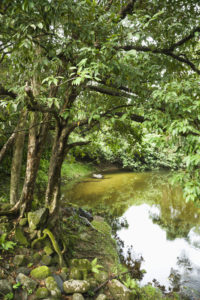
Lush Australia landscape with tree and water

I listened to a radio program today (a repeat) about Aussies trying to understand the concept of COUNTRY and an Anglican Priest talked about how she is trying to “listen to the land.”

That got me thinking. She emphasised, “Don’t grasp at it! Just let it talk to you.”

http://mpegmedia.abc.net.au/rn/podcast/2016/07/sot_20160731.mp3

Could this become a common practice for us and for children? Could we walk mindfully on this ancient land and learn deep listening of the land? Are we still capable?

Sarah (the priest) describes staring at a tree for a long time to really KNOW that tree. What might that feel like? Imagine slowing down like that every day. How might that change us? How might that affect children?

If we could walk like this without phones or noise or headphones, might we come to understand just a tiny bit of what COUNTRY really means to Indigenous Australians.

Probably won’t happen- but what a wonderful thing for all Aussies to do today, this week or soon- walk lightly on this great land and listen with our whole being. It might teach us to go forward with more understanding of what it could really mean to be an Australian. It might also help us understand and gain a new respect for the traditional owners of this land.

I have occasionally encouraged children to stare at and carefully copy real plants, looking closely at every detail and as the concentration deepened you could have heard a pin drop. These relatively young kids slowed down, focused and were so easy to teach after this 10 minute exercise. I wonder if mindful walking or even just mindful gazing at a tree might have the same effect?

I’ll find out tomorrow!


error

Enjoy this blog? Please spread the word :)