Treating kids like rubbish!

“Your son is absolutelycrumpled paper no good at anything!”

I was chatting to one our Mums this evening and she told me of a very sad incident. It concerned her young son and his classroom teacher.

The classroom teacher told the mother, “Your child is absolutely no good at anything. He is not good at reading, writing, maths, art or even physical education.”

The mother gave the best answer possible, “Whatever,” and grabbed a piece of writing paper from the teacher’s desk. She crumpled the paper into a ball and held it up for the teacher to see. “My son is like this crumpled piece of paper. You and this school have completely crushed his spirit and he has folded up deep inside himself.”Then she threw it in the bin and left.

She knows from her mother’s heart and brain that her son has strengths and weaknesses just like any child. She knows that given encouragement and a loving and nurturing learning environment, he will thrive.

This incident took place in a Church school. I think they need to remember the words of Jesus, their leader,

“Then Jesus called for the children and said to the disciples, “Let the children come to me. Don’t stop them! For the Kingdom of God belongs to those who are like these children.”

No wonder this child has no confidence and has given up. At the moment he believes he is useless and it now our job to help him re-build his fractured self-esteem.

How sad that a teacher can behave in this way. Educators are meant to teach and build children up- not crush their beautiful spirits.

Your child won’t amount to much….

AllKids are Smart Front CoverYour child won’t amount to much….

At least 10 times over the last 2 years I have had sad, hurt parents tell me the teacher of their child (primary years) has cast a very negative judgement on their child. Here are a few typical ones:

  • “Will never be academic,” (turned out to be an A student),
  •  “Will not amount to much,” – child picked that up and then pretty much believed it and went on to tell her Mum that the teacher “knows I will never be able to do it!”
  • “Will make a good hairdresser”- yes- that really WAS said! Apologies to all hairdressers as I think you are amazingly gifted!
  • “You need to lower your expectations because he will NEVER go to Uni- just doesn’t have the capacity.”  (That one went on to top his high-school year and will definitely be going to uni!)

How can trained educators do that?

How can we judge human potential so lightly and go on to trample on everyone’s dreams?

Whenever I look at the groups I teach I am always aware that I might have an Einstein, a Richard Branson, Maria Montessori, Marie Curie or a Bill Gates sitting in front of me. They might wriggle around, show little interest and be downright non-compliant at times. So what? Maybe my chosen teaching method that day was boring. Maybe they already knew the material. Maybe they were tired or had a fight with their best friend………

Many very successful adults did very poorly at school and in fact failed!

What does that tell us?

STOP JUDGING!

It could be us as educators or our inflexible exam based system that is breaking the spirit of our children and holding up their potential.

I have met many successful people with terrible memories of school. They were made to feel stupid, inept and eventually angry and resentful. Luckily anger has lots of inherent energy and they used it to fuel their future success.

The interesting thing is that behind all these failures who made good was a parent or mentor who really believed in them.

Just one person to believe in them made the difference!

If not for Einstein’s mother the scientific world would be so much poorer.

My take-away message is two-fold:

  1. To teachers- stop judging potential and treat EVERY child as potentially gifted. Look instead at your teaching methods.
  2. To parents- keep believing. Refuse to swallow the negative, bitter pills given to you. Let your child know you believe in them, provide a positive learning environment and let your child’s mind unfold!

So what if they fail the test, exam or forget the facts? There is a lot more to education than those things.

We believe EVERY child is smart and this is why I wrote a book of the same name.

Refuse to believe anything less.

Contact us on 61 8 92714200 to get a copy of the book. If you are in Singapore you can purchase it from www.september21.com.sg

Email me privately on victoriacarlton@iinet.net.au if you have any matters re your children you would like to discuss.


The ABC of child whispering: M is for the MAGIC OF MOVEMENT

happy jumping child in summer

The ABC of child whispering: M is for the magic of movement.

I was walking our dogs by the river on Sunday, watching them enjoy the sheer joy of just moving- no destination, reason needed. Just the sheer joy of movement was driving them. I was thinking how my gym times are mostly to do with vanity and not just enjoyment and then I realised that wasn’t strictly true.

Lately I get lost in the yoga sessions and I am completely IN it and loving the feeling and movements. The same (amazingly!) is starting to happen in Body Pump and gym workouts. I am losing myself and totally IN my body and it feels good- actually GREAT!

The interesting thing is that all this movement is in fact very good for our brains and this also applies to children. They relish the joy of movement!

I love watching them engage in yoga, Brain Gym or movements from Power Brain kids (by Ilchi Lee.) Even 5 minutes of these movements seem to switch the kids at ICE onto learning and really engage them. Preceded by a short burst of creativity and Followed by 1 minute of mindfulness, we have the perfect formula to begin our sessions.

Our beginning formula is always CMM

CREATIVE/MOVEMENT/MINDFULNESS

Sadly, children often don’t do much physical movement inside classrooms but moving really enhances learning. Qxygen and blood flow to the brain increases, enjoyment and engagement levels rise and children learn more!

“Many early cognitive researchers ignored play, assuming it had nothing to do with intellectual growth. They were dead wrong. Many play-oriented movements have the capacity to improve cognition, including the following:

  • Exercise play (aerobics, running, chasing, dance routines).
  • Rough-and-tumble play (soccer, football, wrestling).
  • Solitary play (doing puzzles, object manipulation).
  • Outdoor learning activities (digging, observing insects).
  • Stand and stretch activities (tai chi, Simon Says).
  • Group or team competitive games and activities (relays, cheerleading).
  • Constructive play (building with blocks, model building).
  • Exploratory play (hide and seek, scavenger hunts, make-believe).
  • Functional play (purposeful play, such as practicing a new skill).
  • Group noncompetitive games (earth ball).
  • Individual competitive games (marbles, track and field, hopscotch).
  • Adventure or confidence play (ropes courses, trust walks).
  • Group noncompetitive activities (dance, drama).
  • Walking excursions (outdoors, indoors).

Play, recess, and physical education are essential for many brain-based (biological) reasons. Here are just some of the benefits of exercise:

  • It allows learners to make mistakes without “lethal” consequences (with far less embarrassment and more fun than in a traditional classroom situation).
  • It enhances learning (Fordyce & Wehner, 1993).
  • It improves the ability to handle stress by “training” the body to recover faster from the quick surges of adrenaline associated with demanding physical activity . . . and classroom environments.
  • It triggers the release of BDNF, brain-derived neurotrophic factor (Kesslak, Patrick, So, Cotman, & Gomez-Pinilla, 1998). This natural substance enhances cognition by boosting the neurons’ ability to communicate with one another.
  • It can enhance social skills, emotional intelligence, and conflict resolution ability.
  • Exercise may increase catecholamines (brain chemicals such as norepinephrine and dopamine), which typically serve to energize and elevate mood (Chaouloff, 1989).”

(Eric Jensen: Teaching with the brain in Mind.)

MOVEMENT in schools is never a waste of time! It will enhance and accelerate learning. We never miss it- if we did we would be missing a vital part of our teaching-learning cycle!


MAD writing procedure

MAD stanjpg_5935_Royalty_Free_Clip_Art_Happy_Pencil_Cartoon_Character_Holding_Golden_Trophy_Cupds for MODELLED AWESOME DAILY writing

We use many visualisations to increase the fluency and speed of children’s writing. This has been a very successful strategy and I have been trying to develop a different but as successful strategy that takes less time when we want to target specific topics, genres or spelling/grammar conventions.

MAD writing is the result and we have now used it with hundreds of children with great results!

The children enjoy it as it is fairly short, targeted and gives them great results.

They love to share their results!

This will not going to replace other forms of writing we do.

It is simply being implemented to increase writing fluency, understanding of sentences, paragraphs, grammar and to improve spelling. New topics are provided each week.

Approximately 20 mins is needed but I have often completed a lesson in 15 mins when short of time!

STEPS:

  1. Write up topic on board.
  2. Briefly discuss and model write YOUR response to this topic. (NOT children’s ideas) 5 mins
  3. Children read your writing aloud. 5 mins
  4. They write their own response  5 mins
  5. Edit and share 5 mins (only 2/3 can share)

Only write 2-4 sentences when you are modelling. Children might write more and they might “borrow” yours. Some children might want to copy yours completely. That is valid as you are a model.

Eventually they will have the confidence to do their own.

 A FEW SAMPLE TOPICS FOR A WEEK

MON- My ideal weekend.

TUES – A terrible experience.

WED – What a surprise!

THURS- My favourite unhealthy food!

FRI- If I ruled the world!

SAT- The world stopped spinning and ………


Here is an example of a lesson where I used the topic MINECRAFT to stimulate children’s writing voices!

https://youtu.be/annKAMzNq1w

Please ask any questions regarding this procedure – victoriacarlton@iinet.net.au and remember we have crafted a very practical one day course for teachers (ALL KIDS CAN WRITE) to demonstrate and explain all our writing strategies and teach you exactly how to apply each one! (Contact us for course details!)


Switching off to switch on with more power!

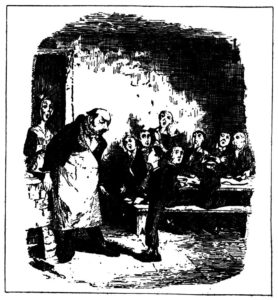
“Please Sir, Can I have some more?” (Oliver Twist)more

I am in a thinking space. A place to reflect.

I’ve only been here 3 days and the magic is already working!

Bali weaves a spell around us all and like Oliver Twist I want more!

I am working over the next 2 days giving JOLLY TRAINING in a school in Sanur and really enjoying the change of pace, beautiful environment, smiles everywhere and warmth.

I’ve had time to think hard about our educational programs and future directions.

Time to just be!

I’m always talking about Gardner’s 8 intelligences and the need to develop the Intra-personal intelligence for children.

But adults need it too. This is the one we so often ignore as we plod on and on and on without ever stopping and asking ourselves important questions such as:

Is there a better way?

Are we missing something important here?

Are we fulfilling our visions? If not- how can we adjust?

Times like this are like flight-plan adjustments!

If I can think, reflect and feel this good within 3 days – then I need it more often!

To really put 100% of our passion and energy into our lives we need this time-out to switch off, and then switch on again but with a brighter light!

The thinking and reflection I have done here will last a year- and then I’ll be back for MORE!

Thanks Bali- 3 weeks next time!

error

Enjoy this blog? Please spread the word :)